Jephtas Gelübde is Giacomo Meyerbeer's first dramatic work, based on the Old Testament story of Jephthah's vow, with a libretto by Aloys Wilhelm Schreiber.
Composer Biography
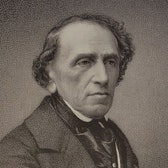
Giacomo Meyerbeer, the composer of this opera, was considered one of the greatest operatic composers until World War I, and his reputation is now being restored.
Performer Biography
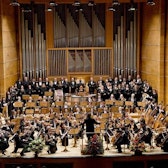
Dario Salvi, the conductor, is a Scottish-Italian musicologist specializing in the restoration and performance of rare works, and is collaborating with Naxos on recordings of Romantic ballets and operettas.
Compositional Technique
Giacomo Meyerbeer's Jephtas Gelübde uses an orchestral apparatus similar to an oratorio, augmented with percussion instruments like cymbals, triangle, side drum, tambourine, and guitar.
Critical Reception
The 1812 premiere performances of Jephtas Gelübde at the Court Theatre in Munich achieved only a 'succès d'estime', despite a brilliant cast.
Interpretation
This recording of Jephtas Gelübde aims for a 'historically informed' performance, featuring a thinner orchestral sound and greater clarity in individual parts, avoiding the 'Romantic' tradition.
Composer's Artistic Vision
Even in his first opera, Jephtas Gelübde, Giacomo Meyerbeer showed a consistent interest in ceremonial and grandiose elements, particularly in the crowd scenes of the three finales.
You might also enjoy...
J. Strauss II: Waldmeister (Excerpts)
Fall: The Rose of Stambul
Albert Lortzing: Zum Groß-Admiral
Sullivan, A.: Cox and Box
Mendelssohn: A Midsummer Night's Dream
(with spoken text and melodramas in English)