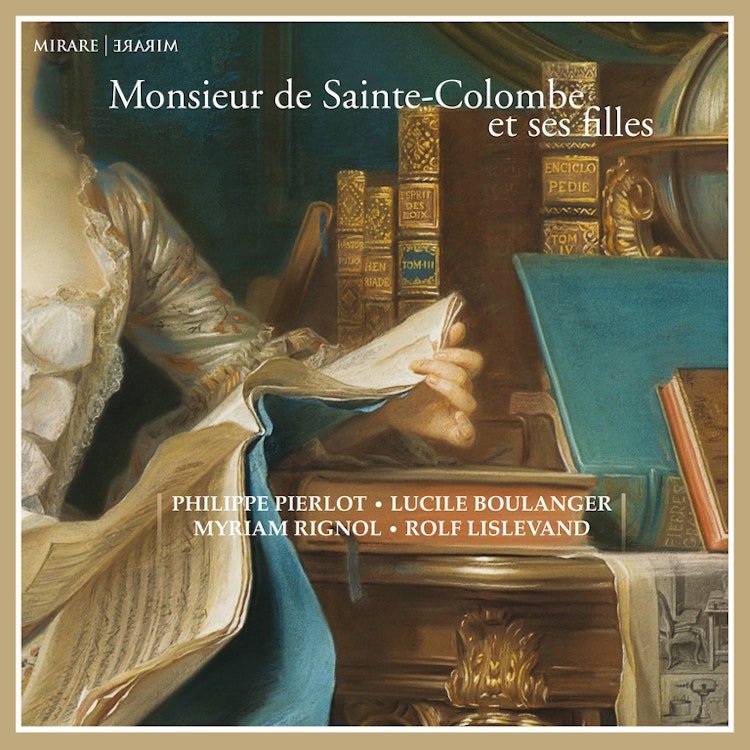
Sainte-Colombe, a viol master, added the seventh string to the viol and introduced silver-spun strings in France, continuously working to perfect the instrument.
Composer's Artistic Vision
Sainte-Colombe's "concerts à deux violes" show a personal taste, featuring fewer allemandes and courantes, but prioritizing sarabandes, gavottes, and gigues in a non-canonical order.
Compositional Technique
The musical "tombeau" (memorial) genre, originating with lutenists, uses the slow tempo and dotted rhythms of the allemande grave to honor the deceased, often with descending motifs as metaphors for death.
Historical Context
Unlike violins, viols, harpsichords, lutes, and theorboes were primarily used for private music-making in "concerts de ruelle" (chamber concerts) for select audiences.
Composer Biography
Monsieur de Sainte-Colombe, a composer and viol master, was praised by his students as "the Orpheus of our time" for his contributions to the viol.
Interpretation
Inspired by the historical freedom in instrumentation, the performers on this disc have transcribed pieces by Chambonnières and Couperin for three viols, in the style of Sainte-Colombe and his daughters.
Compositional Technique
Tombeaux for viol are characterized by violently expressive discourse, harsh dissonances, and tonal instability, with the viol's sound imitating a lamenting voice through vibrato, rests, and descending intervals.
You might also enjoy...
Risonanze: Music for viola da gamba
French Music
Lovreglio: Works for Saxophone Quartet
Boismortier, J.B.: Sonata, Op. 8, No. 3 / Schenck, J.: Sonata No. 8 / Schaffrath, C.: Duetto in D Minor
Schenck: Le nymphe di Rheno
Karol Beffa: Into the dark
Karg-Elert: Frühe Meisterwerke für Kunstharmonium
Majestic Journey - Original Works for Euphonium and Orchestra