The works on this recording were performed in Roman oratories during the pontificate (1623-1644) of Maffeo Barberini, Pope Urban VIII.
Composer's Artistic Vision
Music was introduced into oratories to attract sinners to holy exercises through 'sweet deception,' using vernacular and devotional songs to make them more receptive to spiritual profit.
Composition History
The texts for the two oratorios on this recording, 'La Cecità' and 'Disperar di se stesso', were written by the Tuscan poet Giovanni Lotti and contain almost no biblical references.
Historical Context
Oratories were prayer halls in Rome where informal spiritual exercises were held in Italian, with music playing a significant role in attracting participants.
Album & Artwork
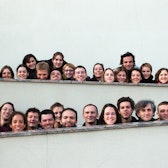
The album title and concept, 'Memento Mori', is inspired by the Borromini Perspective, an architectural optical illusion in Rome that makes a gallery appear longer than it is.
Composition History
The 'Lamento della Maddalena' on this album is a 'contrafactum' of Monteverdi's popular 'Lamento d'Arianna', meaning a new sacred text was substituted for the original secular one without significant musical changes.
Compositional Technique
The scores on this recording include 'written rests' and 'piano subito' indications, which were relatively new and rare in music scores of that era, highlighting the dramatic use of silence and dynamics.
You might also enjoy...
Monteverdi, Rossi: Memento Mori
Flights of Fantasy - Early Italian Chamber Orchestra
Porpora: Notturni per i Defunti
Choral Concert: Dresden Vocal Concert - Porpora, N. / Hasse, J.A. / Galuppi, B.
Le Grazie Veneziane. Musica degli Ospedali
Caldara: Requiem
A due alti
Pergolesi: Stabat Mater / Scarlatti: Stabat Mater; 6 Concerti grossi