The term 'oratorio' initially referred to prayer meetings, and from the 1640s, it also applied to the musical compositions performed in them.
Historical Context
The works on this recording are emblematic of activities held in Roman oratories during the pontificate of Maffeo Barberini, Pope Urban VIII (1623-1644).
Album & Artwork
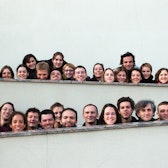
The album's concept, 'Memento Mori', is inspired by Borromini's Perspective at the Palazzo Spada in Rome, an architectural trompe-l'œil that creates an illusion of greater depth.
Historical Context
Oratories in 17th-century Rome were informal prayer halls where spiritual exercises were held in Italian, and music played a significant role in attracting participants.
Interpretation
On this recording, the alto vocal part, usually sung by a contralto or falsetto, is performed by a tenor to give the polyphonic structure greater coherence and homogeneity.
Composer's Artistic Vision
Giovanni Francesco Anerio's Teatro armonico spirituale (1619) states that music was introduced into oratories to 'draw, with a sweet deception, the sinners to the holy exercises'.
Compositional Technique
The Lamento della Maddalena on this album is a 'contrafactum' of Monteverdi's popular Lamento d'Arianna, meaning its text was substituted from secular to sacred without significant musical changes.
You might also enjoy...
Monteverdi, Rossi: Memento Mori
Flights of Fantasy - Early Italian Chamber Orchestra
Porpora: Notturni per i Defunti
Choral Concert: Dresden Vocal Concert - Porpora, N. / Hasse, J.A. / Galuppi, B.
Le Grazie Veneziane. Musica degli Ospedali
Caldara: Requiem
A due alti
Pergolesi: Stabat Mater / Scarlatti: Stabat Mater; 6 Concerti grossi