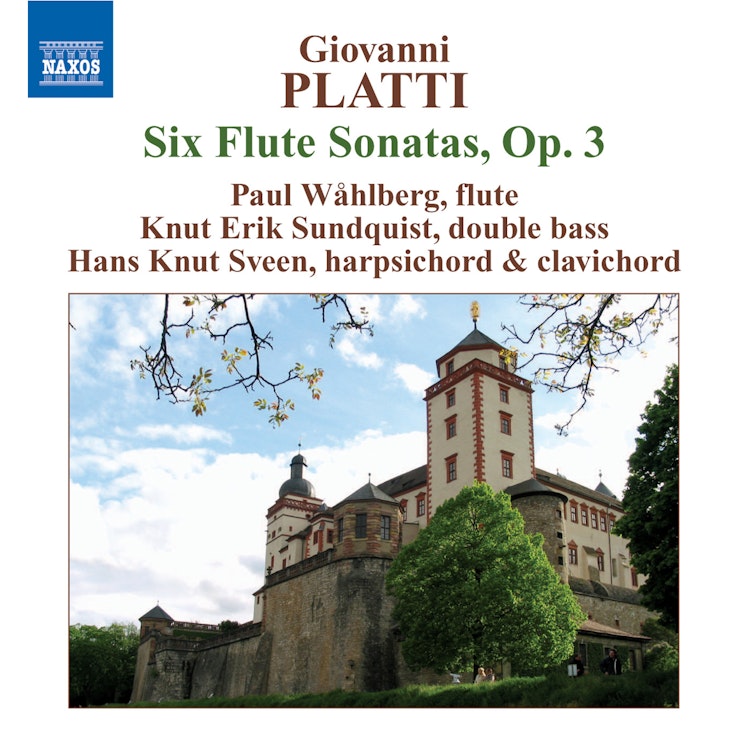
Platti's flute sonatas show a development from Baroque to Classical style, with some pieces featuring distinct Classical characteristics.
Composer Biography
Giovanni Platti, the composer, was educated in Venice and moved to Würzburg in 1722 with other Italian musicians to serve at court.
Interpretation
For Sonata No. 4, the performers chose a clavichord instead of a harpsichord to provide a distinct timbre, as the clavichord was commonly used for solo and ensemble playing at the time.
Composer Biography
Platti was a highly valued musician at the Würzburg court, earning twice as much as the Kapellmeister and holding a unique position.
Performer Biography
Paul Wåhlberg, the flautist, teaches at the world's northernmost music academy in Tromsø, Norway, and specializes in early instruments.
Interpretation
The performers use two different flutes and pitches for the sonatas, reflecting the instruments common at different stages of Platti's career.