Étienne Moulinié, the composer, moved from Narbonne to Paris around 1620 and became 'maître de la musique' for Gaston d'Orléans, brother of Louis XIII, by 1628.
Composer's Artistic Vision
Moulinié's music sometimes reflects the style of Italian artists, including singers, lutenists, and composers, who were brought to France by Mazarin in 1647 to introduce opera.
Compositional Technique
Moulinié's 'Cantique de Moÿse' features a figured bass part, which was a novelty in France at the time, appearing only a year after the first printed figured bass in the country.
Compositional Technique
Moulinié's 'Meslanges' (1658) reveal his innovative qualities, including his skill in handling voices as soloists or in ensembles, and his method of following the text's emotional content over its literal meaning.
Composition History
The French lyrics for Moulinié's 'Cantique de Moÿse' and 'Cantique des trois enfants' are paraphrases by Antoine Godeau, Bishop of Grasse and Vence, who aimed to provide 'agréables et faciles' airs for Catholics to rival Protestant psalm singing.
Composer's Artistic Vision
Moulinié was aware of the innovative nature of his music, describing some of his harmonic and melodic choices as 'daring' in the foreword to his 'Meslanges'.
Compositional Technique
The 'Trois Fantaisies à quatre, pour les violes' by Moulinié are instrumental compositions, a genre popular in 17th-century England, where the composer develops multiple themes related melodically but contrasted in rhythm, tempo, and character.
You might also enjoy...
Moulinié: Cantique de Moÿse
Clérambault: Motets à trois voix d'hommes et symphonies
De Lalande: Petits Motets
Christoph Demantius: Johannes-Passion
Festive Hanseatic Music
Vulnerasti cor meum. Motets from the Song of Songs
Du Mont: Motets à voix seule
Ein Deutsches Barockrequiem
Charpentier: Le Reniement de saint Pierre & Méditations pour le Carême
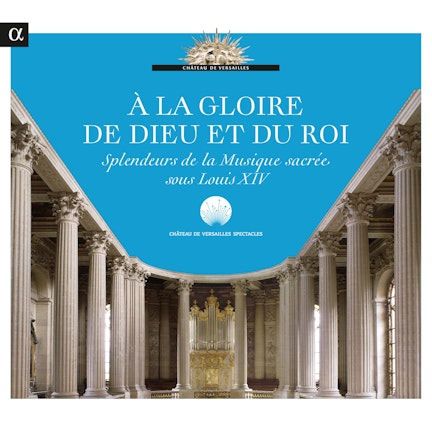
A la gloire de Dieu et du Roi: Splendeurs de la musique sacrée sous Louis XIV