Mozart's Requiem features a transparent and concise four-part chorus as its core, with instrumental parts primarily serving an accompanying function.
Composition History
When Mozart died, only the 'Introitus' of the Requiem was fully orchestrated; the rest was incomplete, with some sections only having vocal parts or fragmentary instrumental ideas.
Composition History
Franz Xaver Süssmayr, who assisted Mozart with other works, completed the Requiem after Mozart's death, following Mozart's instructions and sketches.
Compositional Technique
The Requiem shows the influence of Baroque church music, particularly from Handel and the Bach family, with direct thematic quotations from Handel's works in the 'Introitus' and 'Kyrie'.
Composition History
Mozart's Requiem, his last work, was left unfinished and became an icon symbolizing the tragic genius who died too young.
Recording & Production
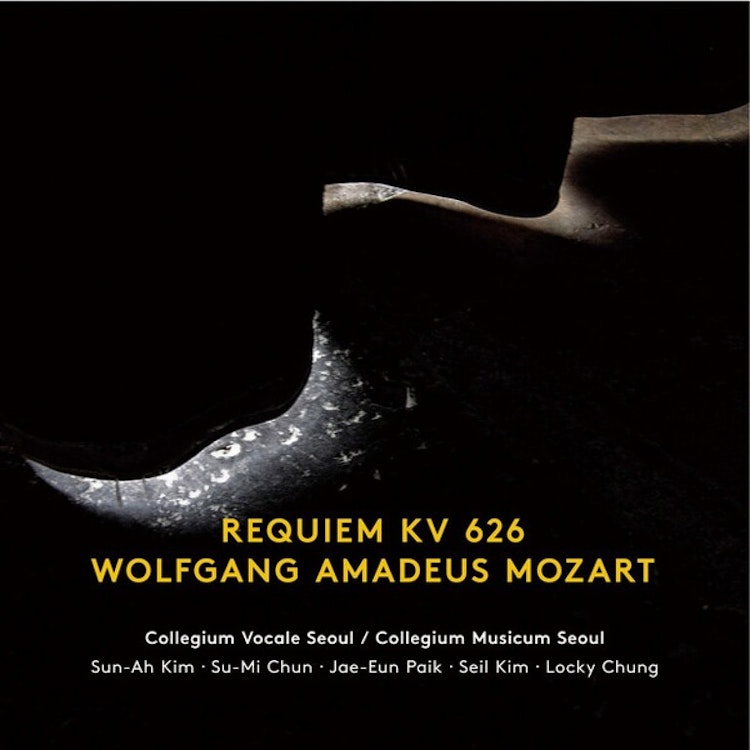
This album was recorded at Kalsan Catholic Church in Incheon, using high-quality microphones such as DPA4006AE and Neumann Usm69i, and a DXD recording format.
Composition History
The commission for Mozart's Requiem came from Count Franz von Walsegg, who intended to pass it off as his own work.
You might also enjoy...
Fürchtet euch nicht: Bassoons & Bombards, Music from the German Baroque
DIVISION: The Virtuoso Consort (Works by John Jenkins)
Antegnati: L'Antegnata
Dobrinka Tabakova: String Paths
Aquila altera
Peeter Cornet: Organ Works
Heavenly Noyse: English Music for Mixed Consort
Venezia stravagantissima
David Pohle: Complete Sonatas & Ballet Music
Cortellini: Le messe
Tessarini, C.: Introducioni A 4, Op. 11, Books 2-4