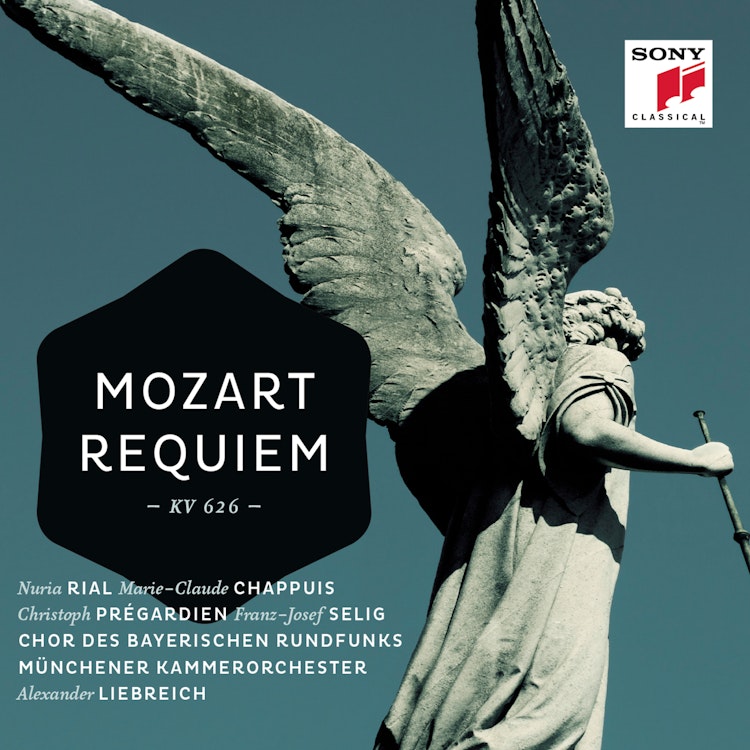
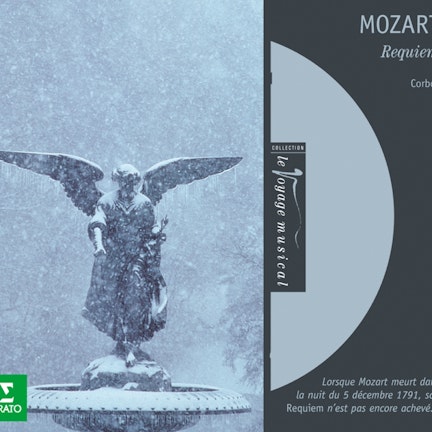
Mozart: Requiem, K. 626 & Ave verum corpus, K. 618
5/9/2014, 17 Tracks, 49:35
Featuring
Alexander Liebreich
Christoph Prégardien
Franz-Josef Selig
Marie-Claude Chappuis
Nuria Rial
Chor des Bayerischen Rundfunks
Münchener Kammerorchester
Wolfgang Amadeus Mozart
Did you know?
1/7
Interpretation
Robert D. Levin's edition of the Requiem, published in 1991, respects Süßmayr's version where it aligns with Mozart's style, but makes changes to instrumentation and reworks string and wind parts for a leaner sound.
Composition History
Mozart died on December 5th, 1791, leaving the Requiem unfinished; it was completed by his pupil Franz Xaver Süßmayr in February 1792.
Composition History
The Requiem was commissioned by Count Franz of Walsegg-Stuppach for his recently deceased wife, but Mozart initially paid little attention to the job due to other commitments.
Critical Reception
Since 1825, musicologists have debated the stylistic weaknesses of Franz Xaver Süßmayr's completion of the Requiem, leading to several new versions of the work.
Composer Biography
Mozart's Requiem and Ave verum corpus were written in 1791, the last year of his life, when he was 35 years old.
Compositional Technique
The Requiem's orchestra has a dark sound, omitting high-timbre instruments like flutes and oboes, and instead featuring bassett horns, bassoons, trombones, trumpets, and timpani.
Composition History
Mozart composed the Ave verum corpus as a gesture of gratitude to Anton Stoll, a choirmaster in Baden who helped his wife Constanze find lodging.
You might also enjoy...
Martini: Requiem pour Louis XVI et Marie Antoinette