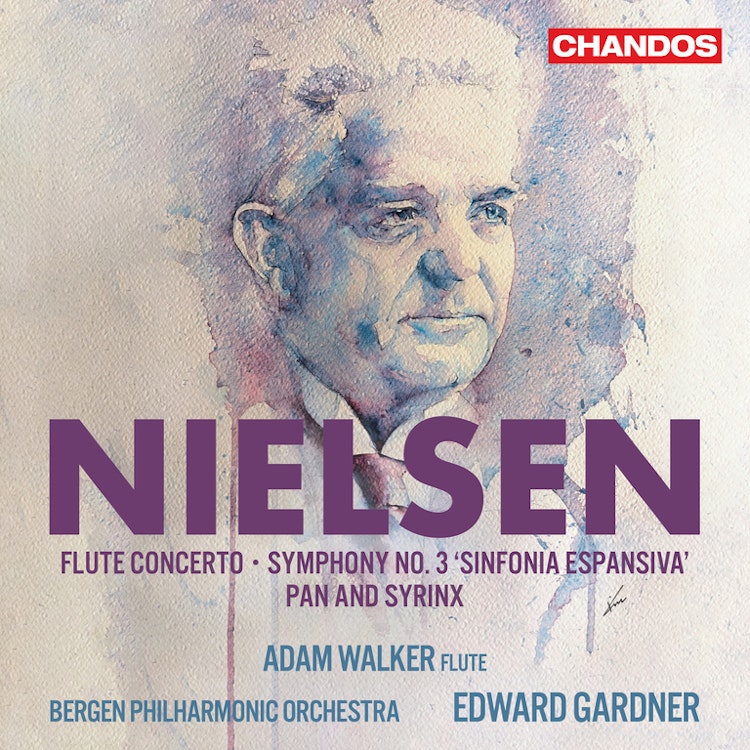
Nielsen: Flute Concerto, Symphony No. 3, Pan and Syrinx
4/5/2024, 7 Tracks, 1:02:53
Featuring
Edward Gardner
Adam Walker
Lina Johnson
Yngve Søberg
Bergen Filharmoniske Orkester
Carl August Nielsen
Did you know?
1/7
Critical Reception
Nielsen's Symphony No. 3 was performed in Amsterdam, Helsinki, Stockholm, Gothenburg, and several German cities within two years of its 1912 premiere, often with Nielsen himself conducting.
Composition History
Nielsen's tone poem, Pan og Syrinx, was composed between 1917 and 1918 and was subtitled a 'Naturscene' (Pastoral Scene for Orchestra).
Composer's Artistic Vision
Nielsen chose the epithet 'espansiva' for his Symphony No. 3, which could mean 'the outward growth of the mind's scope' or describe someone 'open, communicative, cordial, extrovert, direct, spontaneous'.
Compositional Technique
Nielsen's late works, including the Flute Concerto, moved towards modernism by amplifying aspects of his earlier style, such as bar-to-bar repetition and treating instruments as characters, alongside leaner textures.
Composition History
Carl Nielsen began his Symphony No. 3, 'Sinfonia espansiva', in early 1910, completing the first movement by mid-April and most of the rest by the following winter.
Composition History
Nielsen's Flute Concerto was initially intended for clarinet but he switched to flute, reportedly to fulfill a promise to the Copenhagen Wind Quintet.
Compositional Technique
In an era of diminishing tonal harmony, Carl Nielsen sought powerful drive in his symphonies from rhythm, dynamic level, and repetition.