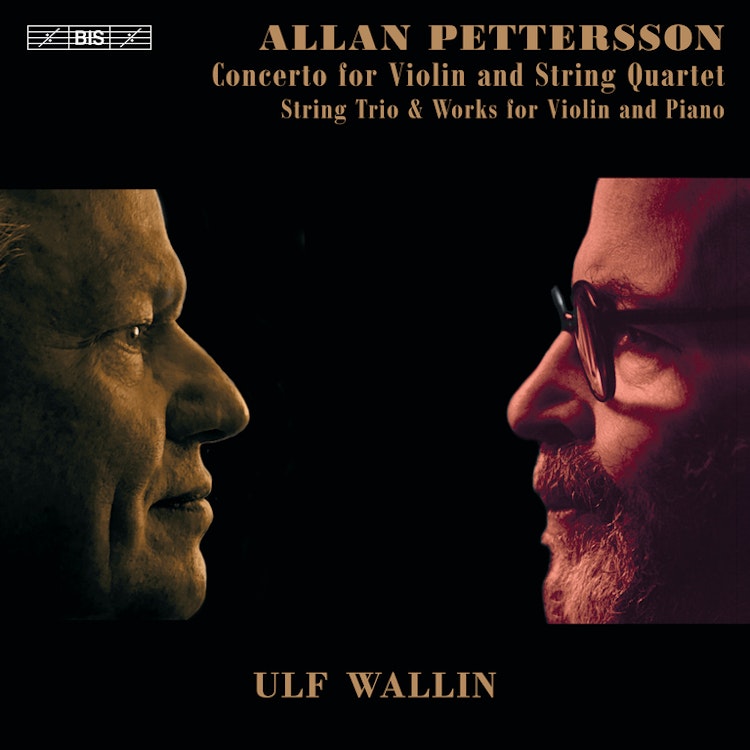
Pettersson: Concerto for Violin and String Quartet
7/28/2023, 12 Tracks, 59:10
Featuring
Ulf Wallin
Sueye Park
Daniel Vlashi Lukaçi
German Tcakulov
Alexander Wollheim
Thomas Hoppe
Allan Pettersson
Did you know?
1/7
Composer Biography
Allan Pettersson, one of Sweden's foremost symphonic composers, grew up in a cramped, damp basement flat in a working-class neighborhood, which he claimed was the origin of his later arthritis.
Composer's Artistic Vision
Pettersson described his Concerto for Violin and String Quartet as "charged to breaking point with dissonance," stating it absorbed the pain of the poor, broken, sick, and cowed people from his upbringing.
Composer Biography
A turning point in Pettersson's studies was switching from violin to viola, an instrument on which he quickly became prominent, even participating in the first Swedish performance of Arnold Schoenberg's Pierrot lunaire in 1937.
Composition History
Pettersson's teacher, Gustaf Nordqvist, encouraged his early compositional efforts, exclaiming, "Put your name to it. You are a composer," after hearing his Two Elegies for violin and piano.
Critical Reception
The premiere of Pettersson's Concerto for Violin and String Quartet in 1951 caused "utter turmoil among the critics," who called him an "ultra-difficult expressionist" and a "controversial modernist."
Composer Biography
Pettersson's early musical experiences came from street musicians, his mother singing religious songs, and his siblings playing instruments like the zither, mandolin, and violin.
Composer Biography
Pettersson began his violin studies at the Stockholm Conservatory in 1930 but received the worst grades among his classmates after nine semesters.
You might also enjoy...
Pizzetti: Piano Trio, Works for Violin, Cello & Piano
Mother Tales
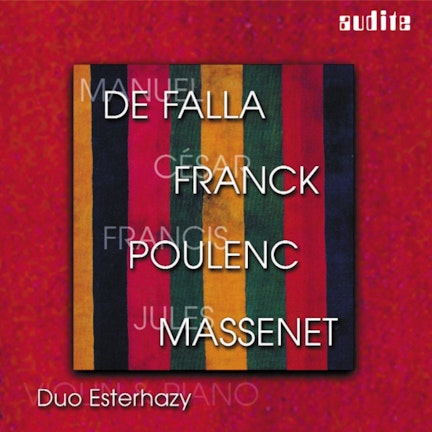
Poulenc - De Falla - Franck - Massenet
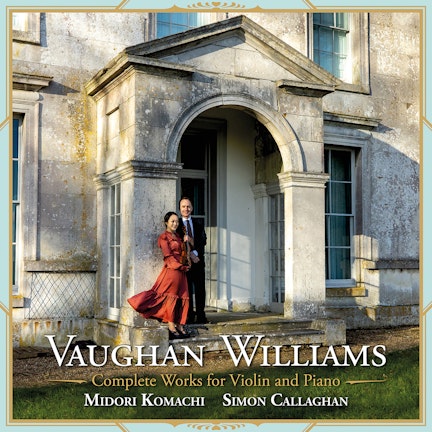
Vaughan Williams: Complete Works for Violin & Piano
Ernst von Dohnany · Richard Strauss: Chamber Works
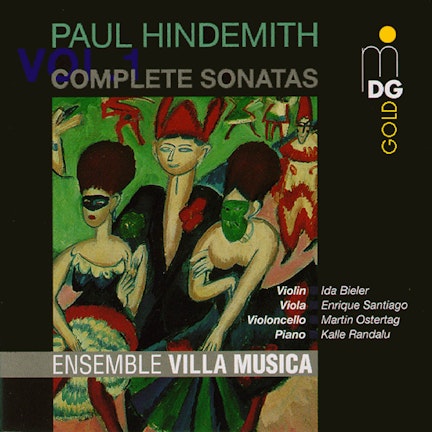
Hindemith: Complete Sonatas, Vol. 1
Schaeuble: Sonata No. 2 - Hindemith: Violin Sonata in E Major - Reger: Violin Sonata in C Minor - Furtwängler: Sonata No. 1