The first movement of Prokofiev's Symphony No. 6 features an extraordinary effect that the composer admitted was supposed to sound like 'asthmatic wheezing'.
Performer Biography
Gianandrea Noseda, the conductor on this recording, is the Principal Guest Conductor of the London Symphony Orchestra and Music Director of the National Symphony Orchestra.
Compositional Technique
The slow movement of Prokofiev's Symphony No. 6 explicitly references Richard Wagner, including a quotation of music associated with Amfortas from Wagner's opera Parsifal.
Composer Biography
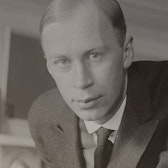
Sergei Prokofiev, the composer, was born in the Ekaterinoslav province of Ukraine and showed prodigious ability as both a composer and pianist from an early age.
Historical Context
The Symphony No. 6 was premiered in Leningrad on October 11, 1947, but was later blacklisted under the Zhdanov Doctrine, which targeted Soviet music.
Composition History
Prokofiev's Symphony No. 6 was composed between 1945 and 1947, a period when the composer was recovering from a concussion and facing increasing political pressure.
Critical Reception
Initially accepted as a war memorial, Prokofiev's Symphony No. 6 was later denounced as 'abnormal, repellent and pathological' by Tikhon Khrennikov, head of the Composers' Union.
You might also enjoy...
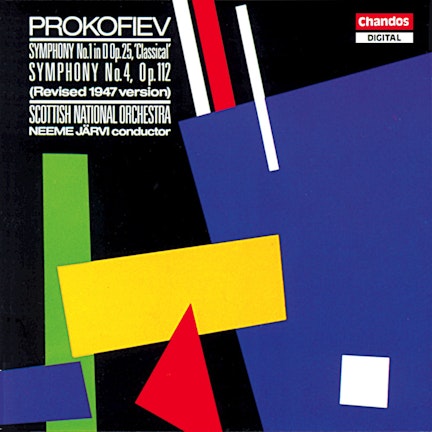
Prokofiev: Symphonies Nos. 1 and 4 (2Nd Version, 1947)
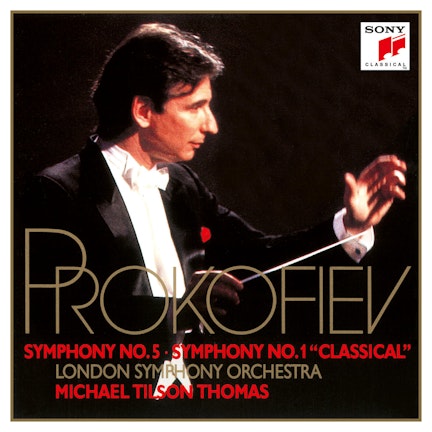
Prokofiev: Symphonies Nos. 1 & 5
Prokofiev: Symphony No. 4
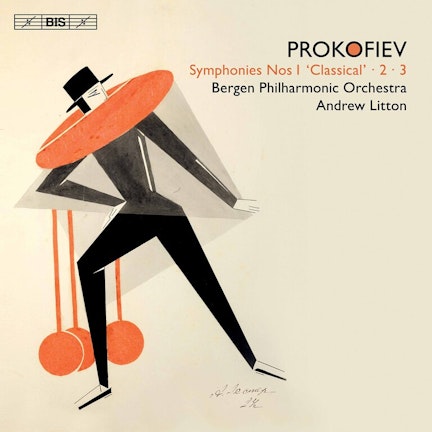
Prokofiev: Symphonies Nos. 1-3
Prokofiev: Symphony No. 6
Prokofiev: Symphonies Nos. 3 & 6
Prokofiev: Symphonies Nos. 2 & 3
Prokofiev: Orchestral Works, Vol. 2
Prokofiev: Symphony No. 7 in C-Sharp Minor, Op. 131