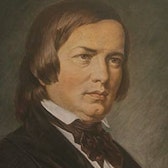
The period from 1849-1852 was particularly productive for Schumann, during which he composed over seventy opus numbers.
Composer's Artistic Vision
Schumann borrowed the title for his Fantasiestücken, a work of three poetic miniatures, from his role model E.T.A. Hoffmann, a celebrated author who inspired many composers.
Composer's Artistic Vision
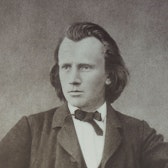
Brahms was deeply interested in older music, collecting original manuscripts, and his Cello Sonata No. 1 in E Minor draws inspiration from J. S. Bach's 'The Art of Fugue'.
Performer Biography
Nils Sylvest, the cellist on this recording, plays a cello built by Johannes Gagliano in 1811, which was specially adapted for him in 1982 because he plays left-handed.
Compositional Technique
Brahms' Cello Sonata No. 1 in E Minor, Op. 38, was titled 'Sonata for Piano and Cello' to emphasize the partnership between the instruments, rather than the cello taking a leading role.
Performer Biography
Mimi Birkelund, the pianist, was a finalist in the Nordic Pianist Competition in 1992 and received Denmark's most prestigious scholarship for pianists, the Martha Stuhres Piano-Stipendie.
Composition History
Schumann's Adagio und Allegro Op.70 and Fantasiestücken Op.73 were originally for horn and clarinet respectively, but publishers noted they could also be performed on cello or violin.
You might also enjoy...
Nielsen: Chamber Music, Vol. 1
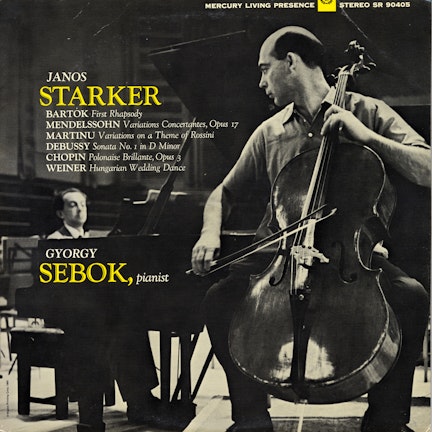
Starker Plays Works by Mendelssohn, Martinu, Chopin, Debussy, Bartok and Weiner (The Mercury Masters, Vol. 5)
Nielsen: Complete Chamber Works for Winds
Onslow: Sextet No. 1 - Septet in B-Flat Major - Nonet in A major, Op. 77 - Wind Quintet in F major, Op. 81
Vasks, P.: Gramata Cellam / Partita / Episodi E Canto Perpetuo
Zoltán Kodály: Sonata for Cello Solo, Cello Sonata, Duo for Violin and Cello
B. Tchaikovsky: Piano Trio, Cello Sonata & Solo Cello Suite