Zoltán Kodály: Sonata for Cello Solo, Cello Sonata, Duo for Violin and Cello
1/1/2000, 8 Tracks, 1:14:07
Featuring
Michal Kaňka
Pavel Hůla
Jaromír Klepáč
Zoltán Kodály
Did you know?
1/7
Compositional Technique
In the Sonata for Unaccompanied Cello, Opus 8, Kodály transforms the cello into various instruments like a harp, cymbalum, genre orchestra, and shepherd's pipes.
Composition History
Kodály, an amateur cellist, initially promised to write a Sonata for cello and piano (Op. 4) for Jenő Kerpely, a cellist who premiered several of his works.
Composer's Artistic Vision
Kodály, along with Béla Bartók, collected peasant folklore around the Danube to form the foundation of a national Hungarian school of music.
Performer Biography
Michal Kanka, the cellist on this recording, was born in Prague in 1960 and won several international competitions, including Prague (1981), Moscow (1982), and Munich (1986).
Composer Biography
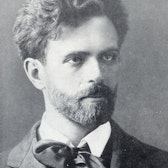
Zoltán Kodály, the composer, studied in Paris with Charles-Marie Widor and was fascinated by the musical world of Claude Debussy.
Compositional Technique
The Sonata for Unaccompanied Cello, Opus 8, requires a scordatura tuning where the C and G strings are lowered a semitone, creating an open B-F#-D-A chord.
Notable Performances
Kodály's Sonata for Cello and Piano, Op. 4, was premiered on May 17, 1910, by Jenő Kerpely on cello and Béla Bartók on piano in Budapest.
You might also enjoy...
B. Tchaikovsky: Piano Trio, Cello Sonata & Solo Cello Suite
Vasks, P.: Gramata Cellam / Partita / Episodi E Canto Perpetuo
Shostakovich: Complete Chamber Music for Piano and Strings
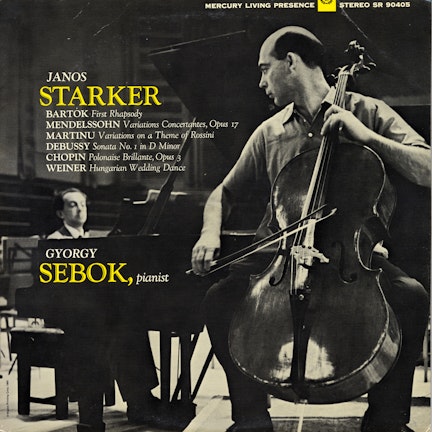
Starker Plays Works by Mendelssohn, Martinu, Chopin, Debussy, Bartok and Weiner (The Mercury Masters, Vol. 5)
Portrait of Yo-Yo Ma
Music for Cello & Piano
Pierre Fournier - Aristocrat of the Cello
Tcherepnin, A: Suite for Solo Cello, Duo for Violin and Cello, Piano Trio, String Quartet No. 2 & Piano Quintet
A European Tribute to Erling Blöndal Bengtsson
Onslow: Sextet No. 1 - Septet in B-Flat Major - Nonet in A major, Op. 77 - Wind Quintet in F major, Op. 81