Modern appreciation of Schumann's later works, like the Third Piano Trio, has shifted from viewing alleged technical faults as signs of mental decline to seeing them as evidence of a highly unusual creative intelligence.
Composer Biography
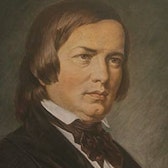
Robert Schumann, at 18, wrote his Piano Quartet in C minor while neglecting his law studies at Leipzig University, dedicating himself to music, literature, and philosophy.
Instruments
The Sechs Studien in kanonischer Form were originally written for the pedal piano, an instrument with a foot-operated keyboard, which Schumann encountered at Mendelssohn's Leipzig Conservatory.
Performer Biography
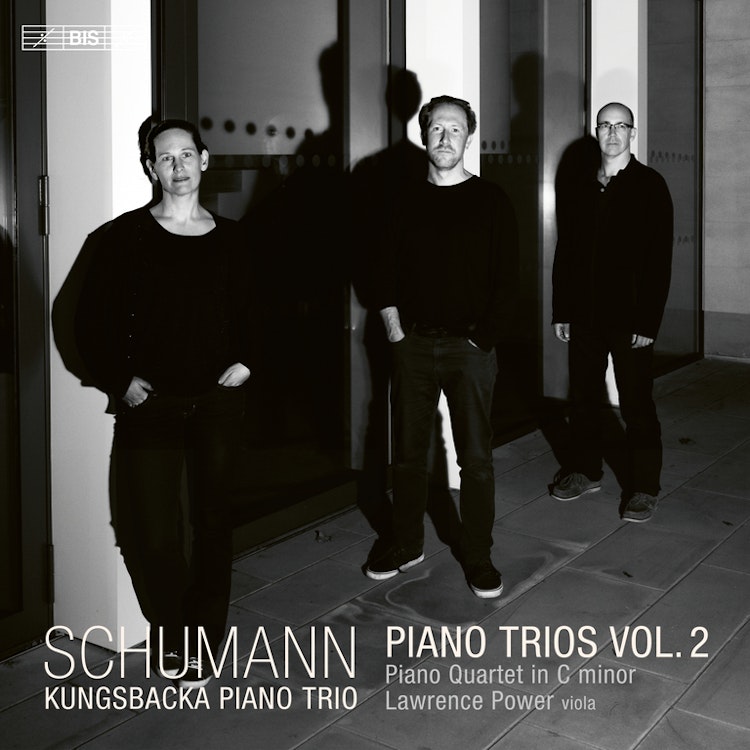
The Kungsbacka Piano Trio, formed in 1997, won First Prize in the Melbourne International Chamber Music Competition and has performed at venues like New York's Carnegie Hall.
Interpretation
Theodor Kirchner's arrangement of Schumann's Sechs Studien in kanonischer Form for piano trio clarifies the contrapuntal writing and enhances the music's romantic sensibility.
Composition History
Schumann's Sechs Studien in kanonischer Form were written after a mental breakdown in 1844, serving as one of his first attempts to recover his creative ability.
Instruments
The instruments used in this recording include a 1709 Stradivarius violin, a 1699 Grancino cello, a Steinway D piano, and a 1590 Antonio Brenzi viola.
You might also enjoy...
La Mer - French Piano Trios
Arensky: Piano Trios
Wolf-Ferrari: The Two Piano Trios
Rachmaninoff & Tchaikovsky: Piano Trios
Poul Ruders: Piano Trio (World Premiere Recording)
Persichetti: Parable 23 / Cowell: Trio in 9 Movements / Reale: Piano Trio No. 2
Pfitzner: Piano Trio in F Major, Op. 8
Schumann Piano Trios 1 & 2
Smetana & Janáček: Piano Trios
French Piano Trios - Golub Kaplan Carr Trio Performs Saint-Saëns, Debussy & Fauré