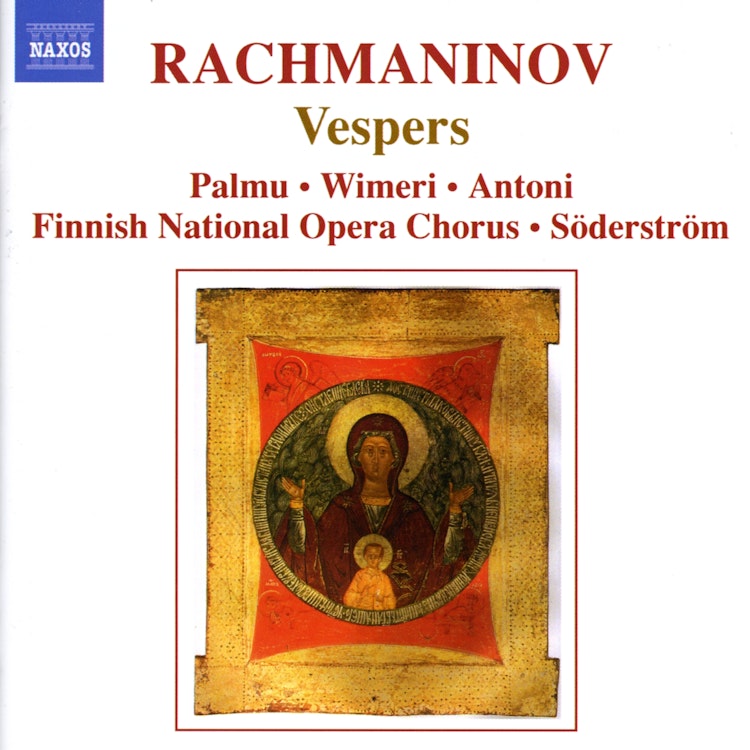
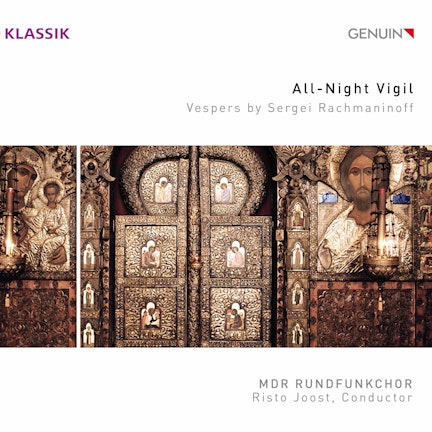
Rachmaninov's All-Night Vigil (1915) is one of only two significant sacred works he composed, both dating from his second creative period.
Performer Biography
Erja Wimeri, the contralto soloist, performed the contralto solo in Rachmaninov's Vespers on tour with the Finnish National Opera Chorus in 2001, coinciding with this recording.
Historical Context
The practice of an all-night vigil, which forms the basis of Rachmaninov's work, has roots in early Christianity, with reports from the 2nd century onwards and even non-Christian sources like Pliny the Younger mentioning Christians holding night services.
Performer Biography
The Finnish National Opera Chorus, Finland's only full-time professional choir, learned Church Slavonic specifically for this recording of Rachmaninov's Vespers.
Composer's Artistic Vision
Rachmaninov's music, including his concert and chamber works, is deeply rooted in the rites of the Russian Orthodox Church, reflecting a profound, though not necessarily confessional, faith.
Composer Biography
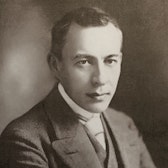
Sergey Rachmaninov, born into a wealthy family, had to move to St. Petersburg after his father squandered their property.
Compositional Technique
Rachmaninov focused on the unchanging parts (ordinaries) of the vigil liturgy, avoiding the complex task of setting the weekly changing parts (propers) in eight different ways.