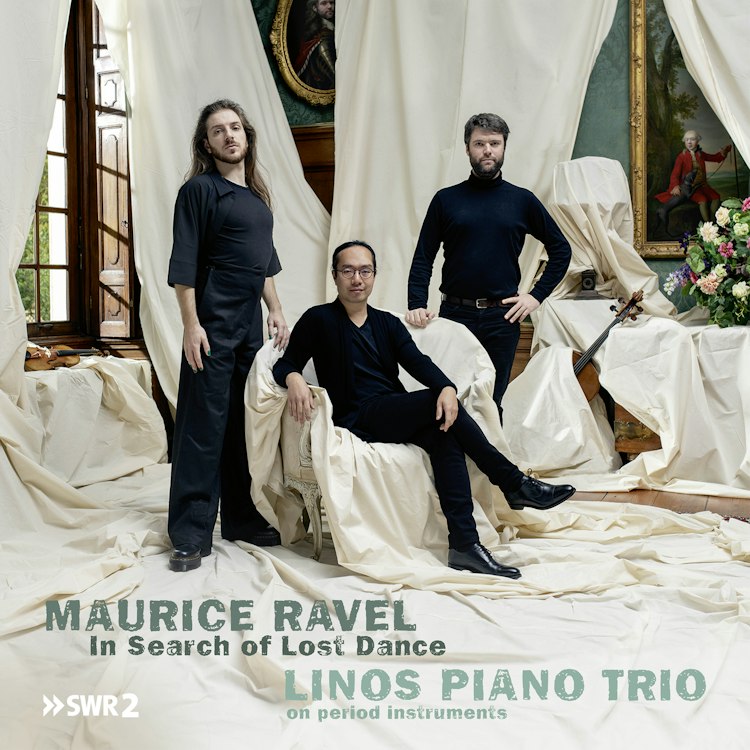
The Linos Piano Trio performs Ravel's music on period instruments, including an 1882 Érard concert grand piano and string instruments with gut strings, to explore how Ravel might have imagined his pieces performed.
Interpretation
The use of a straight-strung French piano combined with gut strings on the violin and cello allows for a different blend of instruments, with more colors and less risk of the piano overpowering the strings.
Performer Biography
The Linos Piano Trio, praised for its 'virtuosity, presence of mind, and wit', was the 1st Prize and Audience Prize winner of the Melbourne International Chamber Music Competition in 2015.
Composition History
Ravel's Piano Trio was completed in five weeks in 1914, driven by the urgency of his impending military service at the start of World War I.
Composer's Artistic Vision
Ravel's fascination with 'otherness' and a 'mask' aesthetic allowed him to distance himself, distort, deceive, and transform through his music, as seen in works like Pavane pour une infante défunte.
Composition History
Le Tombeau de Couperin, composed between 1914 and 1917 during Ravel's service as a truck driver in World War I, is a set of six neo-baroque dances, each dedicated to a friend who died fighting in the war.
Instruments
Maurice Ravel owned and composed on an Érard piano with parallel stringing and a mostly-wooden frame, which produced more timbral differences and a more transparent sound than modern cross-strung pianos.