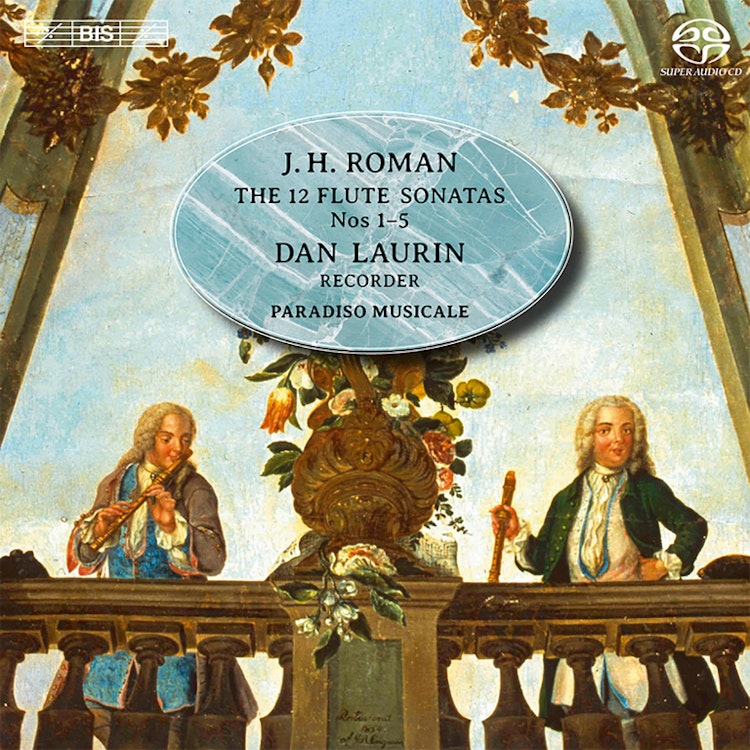
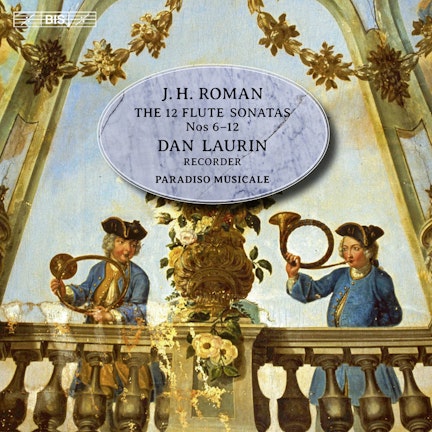
Roman's sonatas are asymmetrical, irregular, and full of unexpected twists, sudden pauses, and cadences, deliberately avoiding the strict counterpoint favored by his contemporaries.
Interpretation
The performers on this album adopted an Italian style of continuo playing for Roman's sonatas, influenced by Gasparini's 'L'armonico al cimbalo', which Roman himself translated into Swedish.
Composer Biography
Johan Helmich Roman, often called 'the father of Swedish music', was Sweden's first distinguished home-grown composer.
Composition History
Roman's flute sonatas are his only published works, dedicated to Queen Ulrika Eleonora the Younger to thank her for supporting his appointment as court Kapellmeister on her birthday in 1727.
Composer's Artistic Vision
Roman's flute sonatas combine complex emotional contexts with folk music forms like the villanella or piva, and movements that are tarantellas in all but name.
Historical Context
Roman's music was at the forefront of musical development, influenced by the stylistic ideals of Naples, a major musical capital where baroque styles were challenged and evolved.
Instruments
While the transverse flute was for the upper classes, the recorder was the most common wind instrument in Stockholm during the Age of Liberty, used across all social strata.
You might also enjoy...
Handel Flute Sonatas
Loeillet de Gant: Recorder Sonatas, Opp. 1-4
Loeillet de Gant: Recorder Sonatas
Telemann, G.P.: 6 Concerts Et 6 Suites (Music's Re-Creation)