The Orchestre National de Lille, conducted by Alexandre Bloch since 2016, has received numerous awards for over 30 recordings and has an ambitious audiovisual policy with its fully digital studio.
Composer's Artistic Vision
Saint-Saëns's perception as a composer changed throughout his lifetime; he championed progressive figures like Wagner and Liszt in his youth but later adopted a more conservative approach.
Composer Biography
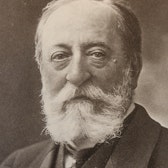
Camille Saint-Saëns was a child prodigy, making his concert debut as a highly gifted pianist at age ten, offering to play any of Beethoven's 32 piano sonatas as an encore.
Compositional Technique
The Danse macabre features the Dies irae Gregorian chant from the Latin Requiem Mass, but Saint-Saëns presents it in a major key and a playful manner, rather than its usual solemn state.
Composition History
Saint-Saëns is often credited with introducing the symphonic poem into France, though earlier works by Berlioz and Franck (Ce qu'on entend sur la montagne of 1848) also fit this category.
Performer Biography
Jun Märkl, the conductor, was honored by the French Ministry of Culture with the Chevalier de l'Ordre des Arts et des Lettres in 2012 for his tenure with the Orchestre National de Lyon and his successful Debussy cycle.
Compositional Technique
In Danse macabre, Saint-Saëns uses scordatura tuning, requiring the solo violin's E string to be tuned down to E flat to create a dissonant tritone, known as the 'diabolus in musica'.
You might also enjoy...
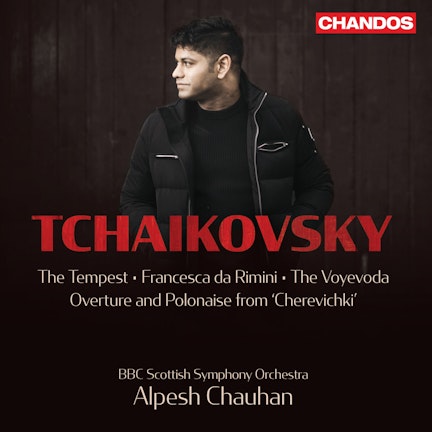
Tchaikovsky: The Tempest, Francesca da Rimini, The Voyevoda, Overture and Polonaise from "Cherevichki"