Saint-Saëns believed music was more than just sensuous pleasure and emotion, stating that true music lovers find absolute pleasure in well-constructed chords, beautiful in their arrangement.
Compositional Technique
The Toccata d'après le 5e Concerto, Op. 111, No. 6, incorporates themes from Saint-Saëns' Piano Concerto No. 5 and includes comical references to ragtime, which was popular in Europe at the time.
Composer Biography
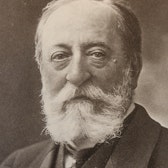
Camille Saint-Saëns, born in Paris in 1835, was a child prodigy who penned his first piano piece at age three-and-a-half, now preserved in the Bibliothèque Nationale.
Composition History
The Études for the left hand, Op. 135, were requested by Saint-Saëns' duet partner, Caroline de Serres, after she had an operation on her right hand.
Compositional Technique
Saint-Saëns' Études, Op. 52, No. 2, are designed to increase finger independence by emphasizing different notes in repeated chords to create an undulating melodic line.
Composer Biography
Saint-Saëns was a polymath with interests beyond music, publishing articles on ancient Roman theatres, musical instruments in murals, philosophy, occult sciences, acoustics, and astronomy.
Performer Biography
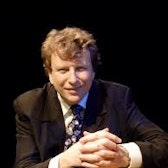
Piers Lane, the pianist on this recording, is a Professor of Piano at the Royal Academy of Music in London and has appeared five times at the BBC Proms.
You might also enjoy...
Sergei Lyapunov: 12 études d'exécution transcendante, Op. 11
Rachmaninov: Etudes-tableaux, Op. 33/39
Philip Glass: Études pour piano - Intégrale
Ravel, Escaich, Liszt, Rachmaninoff & Ligeti: Works for Piano