For Arvo Pärt, the merging of a triad with a melody in his 'tintinnabulation' style had religious meaning: the melodic voice symbolized 'daily egoistic life of sin and suffering,' while the triadic voice represented the 'objective realm of forgiveness.'
Composer Biography
Alfred Schnittke, a composer featured on this album, grew up in a religiously diverse family with a Catholic Volga German mother and a Jewish German father with communist sympathies, though both parents were non-believers.
Composer's Artistic Vision
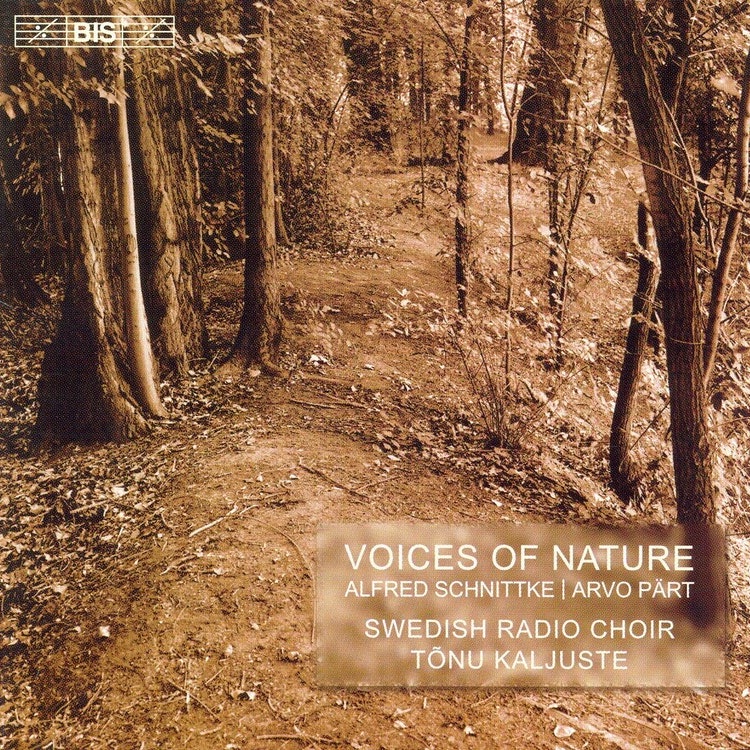
Alfred Schnittke was hesitant to publish his Concerto for Choir and other sacred works outside of Russia, believing that non-Russian performances would lack the necessary religious intensity.
Performer Biography
The Swedish Radio Choir, featured on this recording, has been recognized as a world-leading a cappella choir since the 1960s and has collaborated with conductors like Claudio Abbado and Riccardo Muti.
Composition History
Alfred Schnittke's Concerto for Choir was written after encouragement from Valery Polyansky, the conductor of the Choir of the Soviet Ministry of Culture, who also premiered the work.
Compositional Technique
Arvo Pärt, another composer on this album, developed a compositional style called 'tintinnabulation' in the mid-1970s, inspired by medieval music and the sound of bells.
Historical Context
During Soviet communist rule, very little church music was composed due to the regime's repressive atheism, with Lenin himself advocating for the execution of clergy.
You might also enjoy...
Swedish a cappella, Vol. 2: Paradiso
Lauridsen: O magnum mysterium, Lux aeterna, Ubi caritas & Other Choral Works
Part: Music for Unaccompanied Choir
Finland
Arvo Pärt: I Am the True Vine
The Lost City: Lamentations Through the Ages
Schoenberg: Choral Music
Baltic Voices 3
Arvo Pärt: Da Pacem Domine
Polska
Geistliche Chormusik der Romantik (Sacred Romantic Church Music)
Choral Concert: Stuttgart Chamber Choir - Daniel-Lesur, J.Y. / Ravel, M. / Debussy, C. / Fasch, C.F.C. / Schumann, R.