Schubert achieves an expansive musical space by using shared motivic elements between the slow introduction and the fast Allegro sections, a technique also seen in his later Symphony in C major, D 944.
Composition History
Schubert's Octet in F major, D 803, was composed in 1824 and had its first public performance in 1827, a year before the composer's death.
Recording & Production
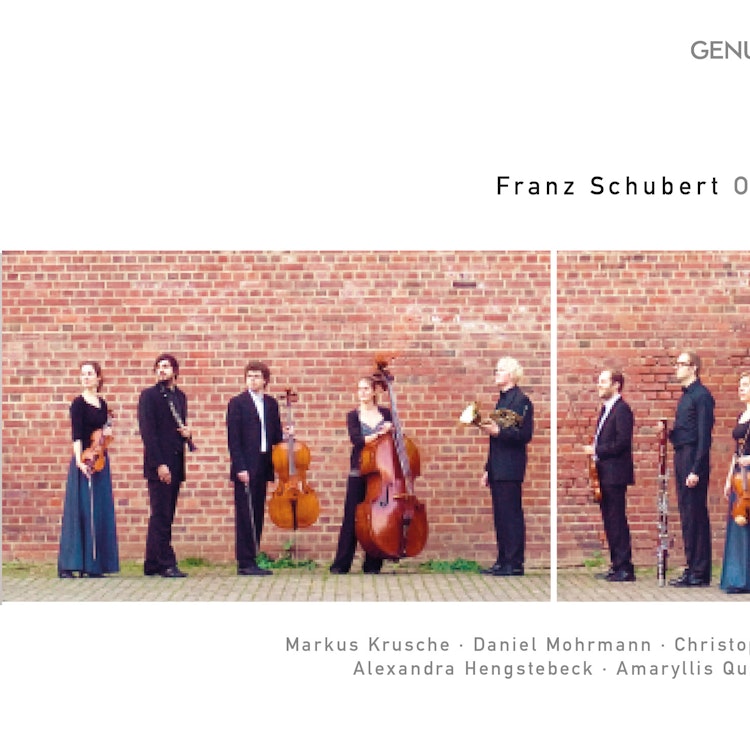
This recording of Schubert's Octet was made in December 2011 at the Aula der Rudolf-Steiner-Schule in Hamburg-Bergstedt, Germany, with Dirk Lüdemann as the recording producer and Tonmeister.
Compositional Technique
The Octet combines symphonic elements in its outer movements with divertimento-like qualities in its middle movements, showcasing Schubert's broad musical sensibilities.
Composition History
The theme for the fourth movement's variations was taken by Schubert from his 1815 Singspiel Die Freunde von Salamanka, specifically from a duet performed by Laura and Don Diego.
Composition History
The Octet was commissioned by Count Ferdinand Troyer, a gifted clarinetist, which is hinted at by the male character in the theme's original Singspiel and the clarinet's prominent role.
Performer Biography
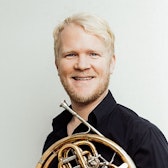
The musicians on this recording, including Markus Krusche (clarinet), Daniel Mohrmann (bassoon), Christoph Eß (French horn), Alexandra Hengstebeck (double bass), and the Amaryllis Quartett, came together after being selected for the German Music Council's National Selection of Concerts for Young Artists in 2009.
You might also enjoy...
Schubert: Octet D 803
Mozart: Piano Concerto No. 18 - Symphony No. 40 (arr. J. Hummel for chamber ensemble)
Schubert: Octet
Schubert: Music for Piano Trio II
Schubert: Octet in F Major, Op. Posth. 166, D. 803
Schubert: Octet in F Major, Op. 166, D. 803
Schubert: Octet in F Major
Schubert: Octet in F Major, D. 803
Schubert: Octet, D. 803
Schubert: Piano Trio No. 1
Schubert, F.: Octet, D. 803
Schubert: Octet for Strings and Winds in F Major, D. 803
Mozart: Pianotrio in B Flat Major K.502; Pianotrio In G major, K. 496; Divertimento In B Flat Major, K. 254