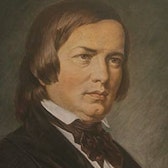
Schumann's Piano Quintet, Op. 44, is notable for its memorable themes and a cyclically rounded structure, featuring the return of the first movement's main motif in the final double fugue.
Composer Biography
Ferdinand Hiller, a contemporary of Schumann, Mendelssohn, and Chopin, was a prolific composer, pianist, and organizer of major music festivals, and was ennobled in 1875.
Interpretation
The Pleyel Quartett Köln performs on period instruments, using gut strings and selective vibrato to achieve a limpid and warm tonal transparency.
Critical Reception
Schumann's Piano Quintet, Op. 44, was an immediate success, receiving enthusiastic acclaim at its public premiere in Leipzig in 1843 and being programmed again the following month.
Recording & Production
The fortepiano used in this recording was made by Wilhelm Wieck, Clara Schumann's cousin, in Dresden around 1860.
Composition History
Robert Schumann's Piano Quintet, Op. 44, was completed in less than four weeks in 1842 and was dedicated to his wife, Clara Schumann, who also premiered it.
Composer's Artistic Vision
Ferdinand Hiller's Piano Quintet, Op. 156, embodies his ideal of a 'mild', Classically restrained Romanticism, while still featuring sweeping lyrical gestures, particularly in the piano part.
You might also enjoy...
Schumann / Franck - Piano Quintets
Schumann & Brahms Piano Quintet
Schumann & Hiller: Piano Quintets
R. Schumann & Kiel: Piano Quintets
Lyatoshynsky, Poleva & Silvestrov: Piano Quintets
Dvořák: Piano Quintets & Bagatelles
Martucci, G.: Piano Quintet / Respighi, O.: Piano Quintet / Wind Quintet
Bacewicz: Piano Quintets Nos. 1 & 2, Quartet for 4 Violins and Quartet for 4 Cellos