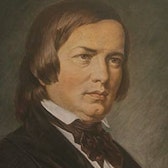
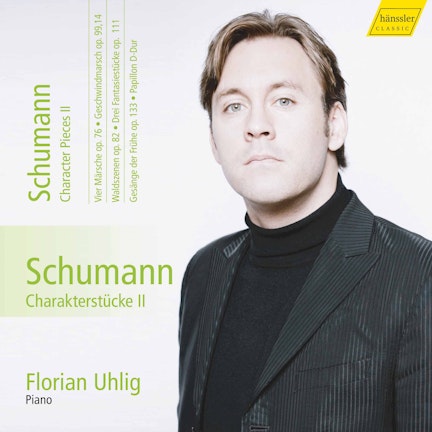
Carnaval is based on four musical notes, A-S-C-H and S-C-H-A, which are derived from the German spelling of Asch, the hometown of Schumann's former fiancée, Ernestine von Fricken.
Performer Biography
Marc-André Hamelin is known for his active interest in little-known repertoire, reflected in his recordings of composers like Alkan, Bolcom, and Godowsky.
Performer Biography
Marc-André Hamelin, a French-Canadian pianist, was made an Officer of the Order of Canada in 2003 and a Chevalier de l'Ordre du Québec in 2004.
Compositional Technique
Schumann's Papillons features fragmentation and kaleidoscopic mood changes, which became important features of his mature music but caused difficulty for early listeners.
Composer's Artistic Vision
Schumann considered Jean Paul (pseudonym of Johann Paul Richter), an early-nineteenth-century writer, as important as Schubert, stating that playing Schubert felt like reading a Jean Paul novel set to music.
Composition History
Schumann's Papillons was inspired by the final scene of Jean Paul's novel Flegeljahre, with the composer almost unconsciously creating the pieces at the piano.
Composer Biography
Schumann, at age twenty, completed his Papillons, a chain of miniature dance pieces, some of which originated even earlier.
You might also enjoy...
Robert Schumann Carnaval - Kreisleriana - Arabeske
Schumann, R.: Papillons / Kreisleriana / 3 Fantasiestücke
Schumann: Piano Music, Vol. 11
Schumann: Piano Works
Schumann: Arabeske, Kreisleriana, Kinderszenen
Idil Biret Solo Edition, Vol. 5
Diaries: Schumann
Schumann: Piano Music
Schumann: Piano Music, Vol. 5
Einsam
Schumann: Arabesque, Kindeszenen & Vogel als Prophet