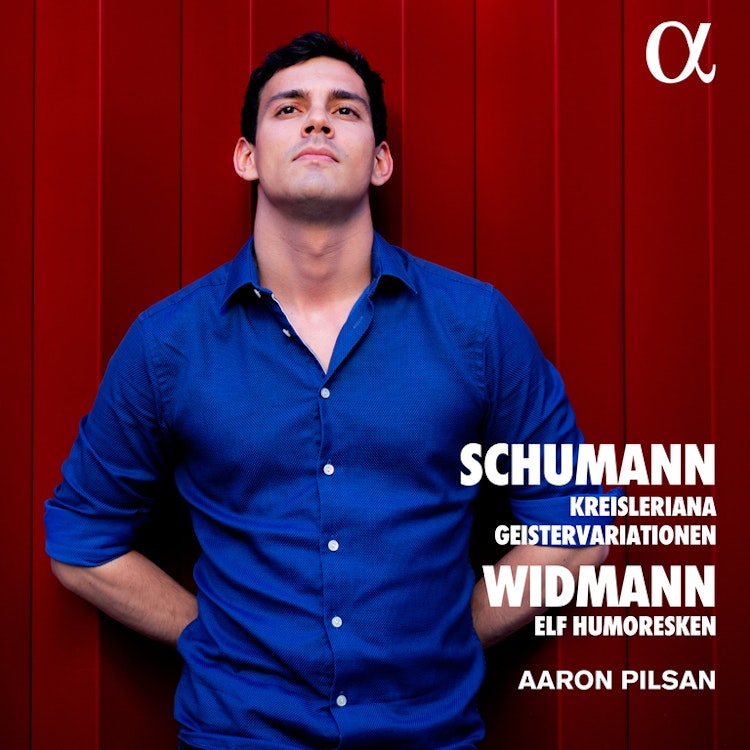
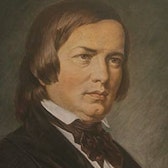
Schumann's Geistervariationen (Ghost Variations) is his last piano composition, written in 1854 during a period of delusions and hallucinations, shortly before his death.
Compositional Technique
Jörg Widmann's Elf Humoresken (Eleven Humoresques) includes a direct quote from Schumann's Geistervariationen in its tenth piece, 'Lied im Traume' (Song in a dream).
Compositional Technique
Robert Schumann's piano music is unique for its eruptive and poetic nature, focusing on a clear emotional feeling he called 'Gefühlsdeutlichkeit' (clarity of sentiments).
Compositional Technique
In his Geistervariationen, Robert Schumann believed he heard voices dictating the music, imagining the ghosts of Schubert and Mendelssohn singing a theme from his Violin Concerto.
Composer's Artistic Vision
For Jörg Widmann, humoresques, like those by Schumann, Sibelius, and Dvořák, are not merely funny pieces but can be serious, even deadly serious, affairs.
Composition History
Schumann's Kreisleriana, Op. 16, composed in April 1838, is based on Johannes Kreisler, a fictional wild and eccentric conductor from E.T.A. Hoffmann's novels.
Composer's Artistic Vision
Jörg Widmann, a contemporary German composer, was greatly inspired by Robert Schumann's music, sharing a similar musical language rooted in feelings and emotions.
You might also enjoy...
From Afar
Wanderer Without Words
Brahms Intimissimo with Blüthner 1862
Ligatura
Schumann & Chopin: Davidsbündlertänze and Polonaise-fantaisie