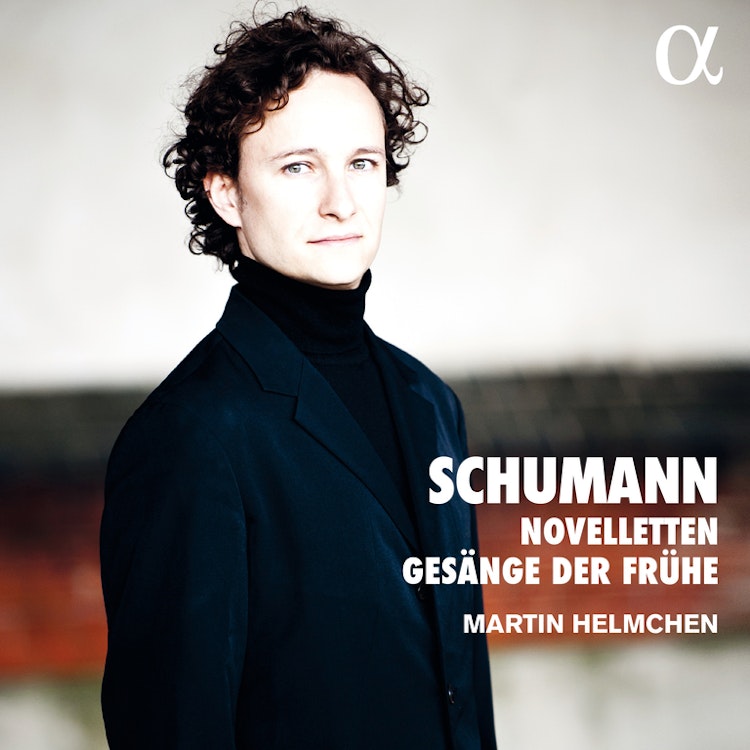
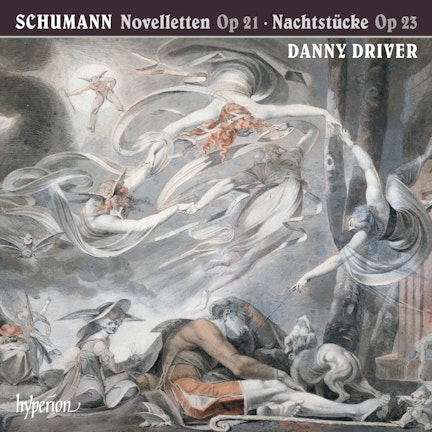
This album presents a biographical program of Robert Schumann's life, featuring his early artistic emergence, his devotion to Clara, and the meditative mood of his final happy phase.
Composer Biography
Robert Schumann often depicted two aspects of his personality in his music: 'stormy Florestan' and 'gentle Eusebius,' inspired by characters from Jean Paul's novel Flegeljahre.
Historical Context
Clara Wieck (later Clara Schumann) met Frédéric Chopin in Paris in the early 1830s, leading to a purely artistic friendship that influenced works by both Clara and Robert Schumann.
Composition History
Robert Schumann's Gesänge der Frühe, Op. 133, his penultimate piano work, was originally intended to be dedicated to 'Diotima,' a character from Friedrich Hölderlin's novel Hyperion.
Composer's Artistic Vision
Robert Schumann described his Gesänge der Frühe as depicting feelings at the approach of morning, emphasizing 'expression of feeling' over 'tone-painting,' echoing Beethoven's words about his Pastorale Symphony.
Composition History
Robert Schumann's Eight Novellettes, Op. 21, were titled in part due to the musicality of the name of English opera singer Clara Novello, and as a playful reference to his beloved Clara Wieck.
Compositional Technique
The first of Robert Schumann's Eight Novellettes, Op. 21, begins with a 'manly' chordal texture, like a knightly march, and features harmonies that break up into astonishing realms.
You might also enjoy...
Schumann: Scenes from Childhood; Waldszenen – Janáček: On the Overgrown Path, Book 1
Ondine
Zirkustänze
Schumann: Complete Piano Works, Vol. 7 – Schumann and the Counterpoint