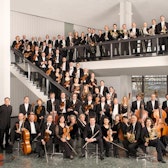
Deutsche Radio Philharmonie Saarbrücken Kaiserslautern
KammerChor Saarbrücken
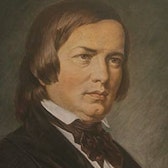
Robert Schumann
Did you know?
1/7
Composition History
Robert Schumann began composing his Requiem in D flat Major, Op. 148, on April 26, 1852, completing the rough draft by May 8 and orchestration by May 23.
Compositional Technique
Schumann's Requiem in D flat Major, Op. 148, is not a disturbing lament and exhibits hardly any infernal terror, with the trumpets of the Last Judgement sounding almost friendly.
Composer's Artistic Vision
In 'Der Königssohn,' Schumann emphasized the young king's recognition by the people, expressing his ideal of a Poetic Age where political freedom nurtures poetry.
Notable Performances
Robert Schumann never witnessed a performance or publication of his Requiem, Op. 148; the complete work premiered privately in Leipzig in 1864.
Composer Biography
Schumann, a Protestant who characterized himself as 'religious without a religion,' reportedly said of his Requiem, 'You write this sort of thing for yourself.'
Composition History
The choral ballad 'Der Königssohn' (The King's Son) Op. 116, composed in 1851, was the first of three ballads by Robert Schumann based on texts by Ludwig Uhland.
Composition History
Schumann's 'Nachtlied' (Night Song) Op. 108, based on a poem by Friedrich Hebbel, was composed rapidly in November 1849, sketched on the 4th and orchestrated between the 8th and 11th.
You might also enjoy...
Robert Schumann: Der Rose Pilgerfahrt & Requiem
Biber: Requiem a 15 & Vesperae a 32
Fauré : Requiem, Messe basse & Cantique de Jean Racine
Herzogenberg: Totenfeier & Requiem
Szymanowski: Stabat Mater - Litania - Demeter
Stravinsky: Symphony of Psalms / Boulanger, L.: Psalms