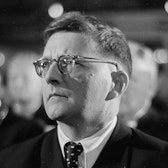
Both the Third and Fourth String Quartets were written during the tumultuous 1940s, a challenging time in the Soviet Union and in Shostakovich's life.
Composer's Artistic Vision
Shostakovich's music, according to violist Fyodor Druzhinin, reflects the terror, repression, and suffering of his epoch, leading to tragic apotheosis or mysterious transformation.
Performer Biography
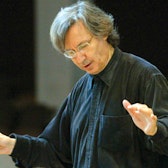
Rudolf Barshai, the conductor and violist orchestrating these works, was a friend of Shostakovich and a violist in the Borodin Quartet.
Performer Biography
Jean-Jacques Kantorow, the conductor, was born in Cannes, France, but is of Russian extraction and was the first non-Finnish citizen to receive the Espoo Medal in 2003.
Composer's Artistic Vision
Shostakovich believed Jewish music had the unique ability to build a jolly melody on sad intonations, stating, 'Why does a man strike up a jolly song? Because he feels sad at heart.'
Composer Biography
Shostakovich's fifteen string quartets, written between 1938 and 1974, are a significant contribution to the genre, many being monumental in length and symphonic in structure.
Historical Context
Shostakovich's Fourth Quartet, which includes references to Jewish music, could not be premiered until December 1953, after the death of Stalin, due to the anti-Semitic state.
You might also enjoy...
Schostakowitsch: Kammersinfonien
Weinberg: Orchestral Works
Lokshin: Songs of Margaret & Symphonies Nos. 7, 10