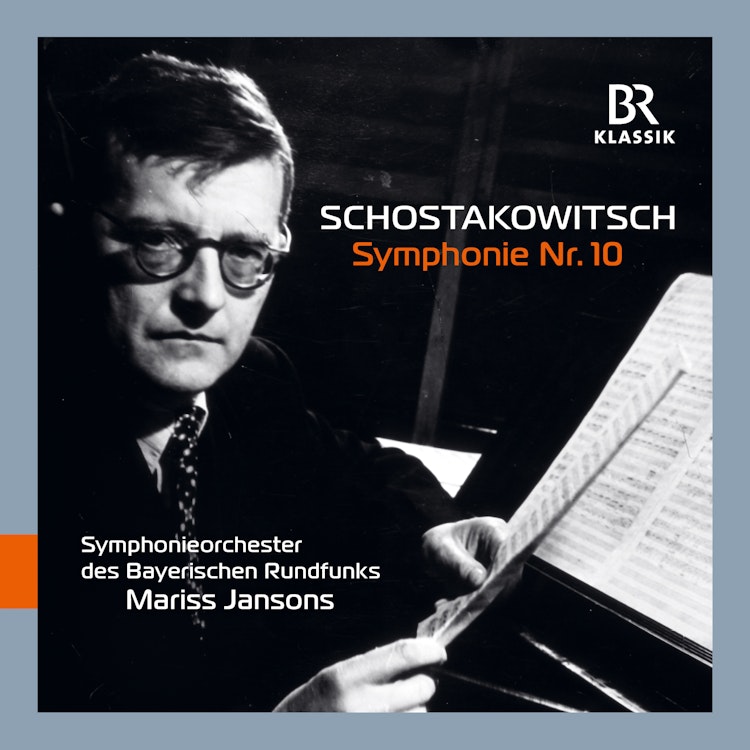
German Record Critic's Award - Quarterly Choice 1/2020.
Featuring
Mariss Jansons
Symphonieorchester des Bayerischen Rundfunks
Dmitri Shostakovich
Did you know?
1/7
Critical Reception
A public discussion of the Tenth Symphony was organized by the Union of Composers after its premiere, where both opponents and supporters were allowed to speak, and which Shostakovich reported 'ended in my favour'.
Recording & Production
The Symphonieorchester des Bayerischen Rundfunks, conducted by Mariss Jansons, won a Grammy in 2006 for 'Best Orchestral Performance' for their recording of Shostakovich's 13th Symphony.
Composer's Artistic Vision
Shostakovich explicitly stated in his Memoirs that the Tenth Symphony is about 'Stalin and the Stalin era', with the second movement being a musical portrait of Stalin.
Performer Biography
Mariss Jansons, the conductor on this recording, was born in Riga in 1943 and studied violin, piano, and conducting at the Leningrad Conservatory.
Composition History
Shostakovich composed his Tenth Symphony immediately after Stalin's death in 1953, having not written a symphony since his Ninth in 1945.
Compositional Technique
Shostakovich incorporated a four-note motif representing his initials (D-Es-C-H, or D-E flat-C-B) into the third movement, placing it 'obsessively at the centre of the action'.
Compositional Technique
The second movement of the symphony, a short Allegro, is considered a musical portrait of Stalin, characterized by 'unbridled aggression' and a 'hounding motif'.
You might also enjoy...
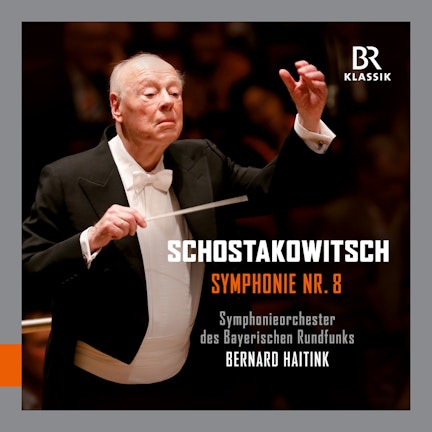
Shostakovich: Symphony No. 8 C minor
Shostakovich: Symphony No.4
Stravinsky: Symphony In Three Movements; Symphony In C
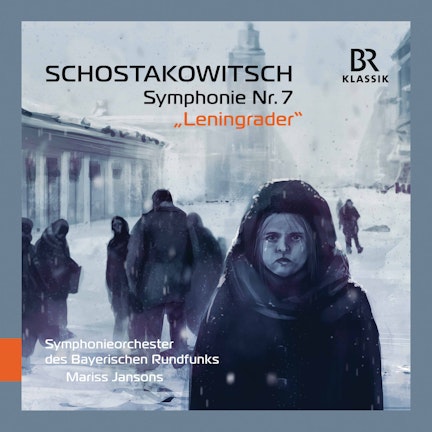
Shostakovich: Symphony No. 7 in C Major, Op. 60 "Leningrad" (Live)