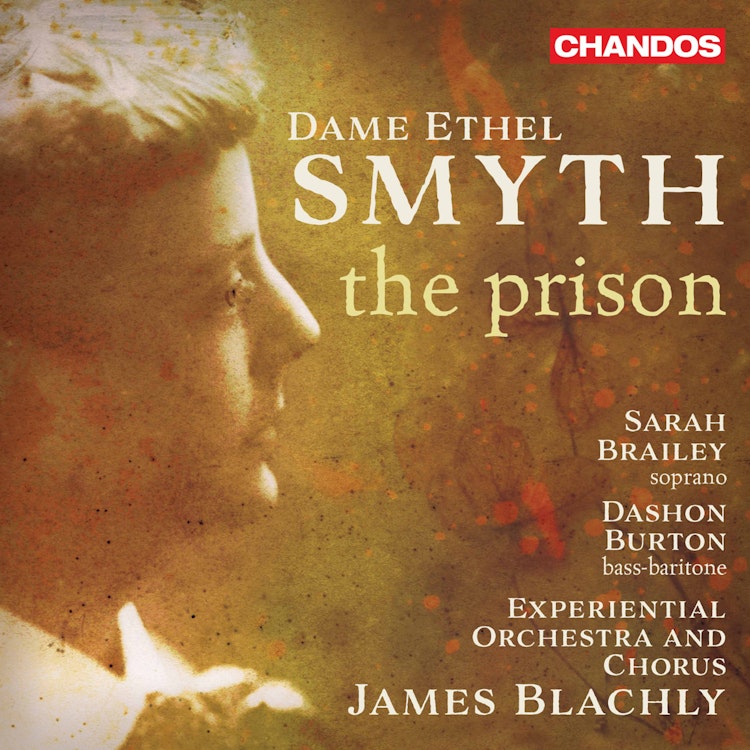
The world premiere recording of a major work by Dame Ethel Smyth, the important early 20th-century English composer. The Prison is a symphony in two parts – “Close on Freedom” and “The Deliverance” – which sets a text by Henry Bennet Brewster concerning a prisoner’s reflections on life as death approaches. Soprano Sarah Brailey and bass-baritone Dashon Burton are the soloists, performing with the Experimental Orchestra and Chorus and conductor James Blachly.
Featuring
Dashon Burton
Sarah Brailey
James Blachly
Experiential Chorus
Experiential Orchestra
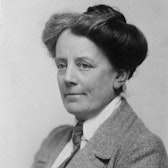
Ethel Smyth
Did you know?
1/7
Composer's Artistic Vision
Smyth used the title 'symphony' (in lower case) for "The Prison" to denote an ancient Greek idea of 'concordance' of sweet sounds, not the orchestral genre.
Composition History
Dame Ethel Smyth completed "The Prison," her first and only symphony and last major work, in 1930 at the age of seventy-two.
Compositional Technique
Smyth incorporated two ancient Greek modal melodies, which she noted down at a museum in Smyrna during her travels, into Part II of "The Prison."
Composition History
Smyth compiled the libretto for "The Prison" from "The Prison: A Dialogue" by her late friend Henry Bennet ('HB') Brewster, which was originally published in 1891.
Composer Biography
Dame Ethel Smyth was arrested and sentenced to prison in 1912 for throwing stones at the Colonial Secretary's house during the suffrage campaign.
Composer Biography
While imprisoned, fellow suffragette prisoners famously sang Smyth's "March of the Women" in the exercise courtyard, with Smyth conducting them with a toothbrush through her cell bars.
Recording & Production
This recording of Dame Ethel Smyth's "The Prison" is a world-premiere commercial recording, following a four-year process of preparing a new performance edition and giving the U.S. premiere.
You might also enjoy...
Smyth: The Prison
Dessau: Haggadah shel Pesach
Nowowiejski: Quo vadis, Op. 30
GATM - Symphonic Highlights
Missa Solis: Requiem For Eli
Georgiy Dmitriev: From "The Russian Primary Chronicle"
Invictus: A Passion
Leifs: Edda, Pt. 2, Op. 42 "The Lives of the Gods"
Klenau: Symphony No. 9
Kozlovsky: Requiem
Walton: Hamlet & As You Like It
José Luis Turina: Exequias, in Memoriam Fernando Zóbel & Concierto para Violin y Orquesta