In the sixteenth century, a motet was a musical setting of any Latin text, not necessarily religious, and often performed in private by small groups of singers, similar to madrigals.
Composer's Artistic Vision
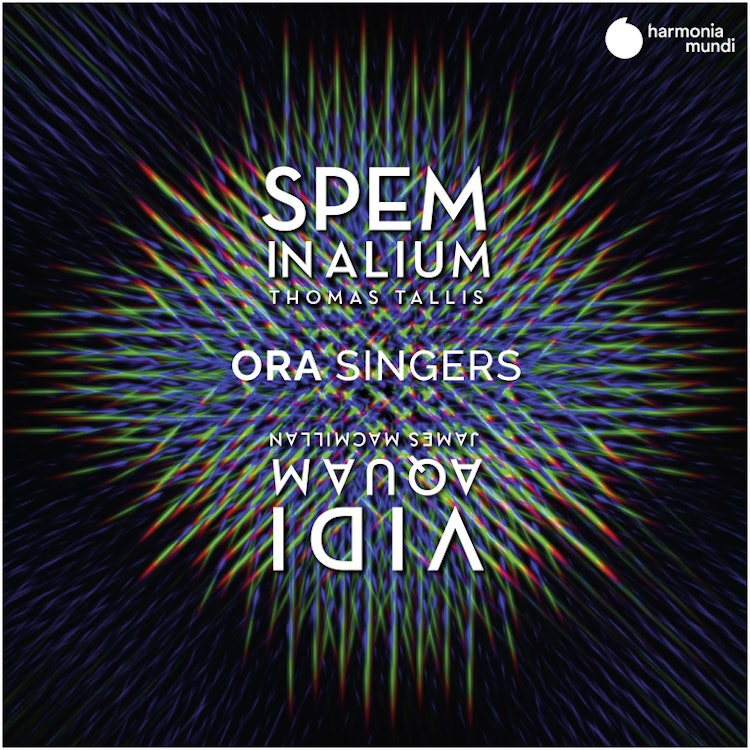
James MacMillan chose the Easter sprinkling song Vidi aquam for his forty-part motet, using Tallis's original as inspiration for how he utilized eight five-voiced choirs and moved the music to build sound from one to forty voices.
Composition History
Sir James MacMillan's Vidi aquam, also a forty-part motet, was commissioned by ORA Singers as a 'reflection' of Tallis's Spem in alium.
Compositional Technique
Tallis's Spem in alium was likely designed to be sung 'in the round' by four choirs of ten singers, each subdividing into 5+5, possibly for an intimate, eight-sided space like those at Nonsuch Palace.
Composition History
Thomas Tallis's forty-part motet, Spem in alium, was commissioned in the late 1560s by two Tudor noblemen, Thomas Howard, fourth duke of Norfolk, and Henry Fitzalan, twelfth earl of Arundel.
Historical Context
The five sixteenth-century composers on this album—Philip van Wilder, Derrick Gerarde, Alfonso Ferrabosco, Thomas Tallis, and William Byrd—all worked under the influence of Nonsuch Palace, a grand residence built by King Henry VIII.
Historical Context
Three of the sixteenth-century composers featured—Philip van Wilder, Derrick Gerarde, and Alfonso Ferrabosco—were foreign-born but resided in England, serving Tudor monarchs or magnates who appreciated foreign fashions.
You might also enjoy...
Tallis: Latin Church Music
The Earth Resounds
Motets - Palestrina
Tallis: Spem in alium; The Lamentations of Jeremiah
Sweelinck: Psalms
Padovano: Missa A la dolc' ombra & Missa Domine a lingua dolosa
The Tallis Scholars Sing Thomas Tallis
A Monk's Life
Spem in alium. Vidi aquam
Tallis: Sacred Choral Works
Taverner: Missa Sancti Wilhelmi & Other Sacred Music
Bouzignac: Motets
Taverner: Missa Corona spinea & Other Sacred Music