Late 19th and early 20th-century British music, including Stanford's works, frequently featured the poetry of Walt Whitman, whose American character and free prose appealed to composers seeking new avenues of expression.
Composer Biography
Charles Villiers Stanford, a highly educated and erudite individual, discovered Walt Whitman's work as early as 1873, likely through William Michael Rossetti's 'Poems of Walt Whitman'.
Compositional Technique
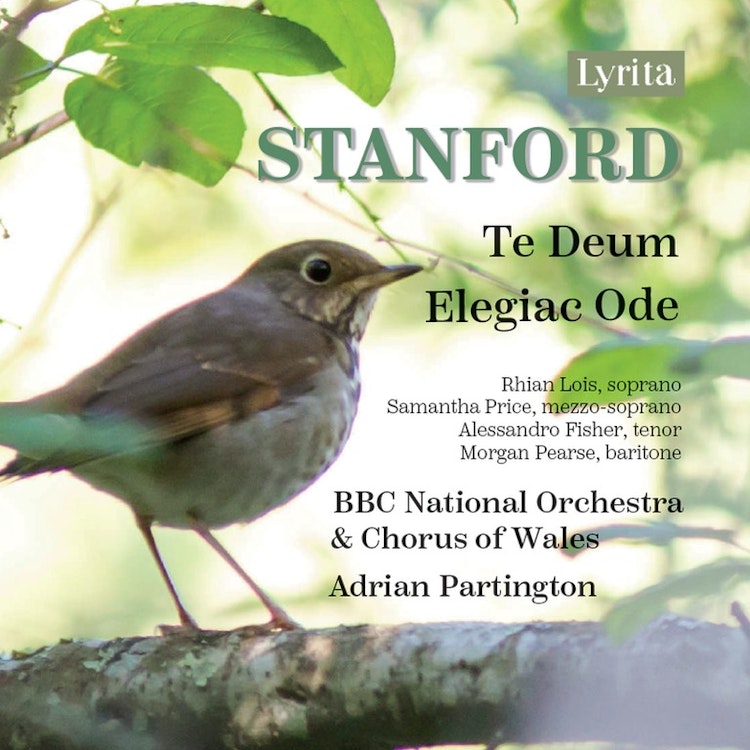
A notable feature of Stanford's 'Te Deum' is an arresting modulation from B flat major to B major after the first choral statement, a tonal event incorporated throughout the work.
Composition History
Stanford's 'Te Deum' Op. 66 was first performed at the Leeds Festival on October 6, 1898, and was intended to commemorate Queen Victoria's accession to the throne sixty years prior.
Composition History
The 'Elegiac Ode' was Stanford's first mature work for major British choral festivals, commissioned by the Norfolk and Norwich Festival in 1884.
Critical Reception
Stanford's 'Elegiac Ode' courted controversy among contemporary critics due to its use of Walt Whitman's 'contemporaneous' prose, with some associating it with 'modernist European musical tendencies' like Brahms's 'Deutsches Requiem'.
Compositional Technique
The 'Elegiac Ode' is structured like a four-movement choral symphony, with substantial outer movements flanking two shorter inner essays, designed to be performed without a break.
You might also enjoy...
Die Berliner Singakademie
Faure: Requiem, Op. 48 / Pavane, Op. 50
Fauré Requiem, Cantique de Jean Racine
Saudade: Choral Music from Brazil
Christmastide
Fritz Stüssi, A Swiss Romantic
Together At Christmas
Nico Muhly: A Good Understanding
Christmas With The Academy
Stanford: 3 Motets & Other Choral Music
Sacred Songs
Berlioz: L'Enfance du Christ; La Mort de Cléopâtre; La Mort d'Ophélie etc