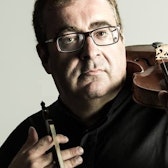
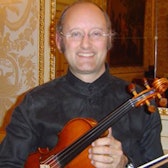
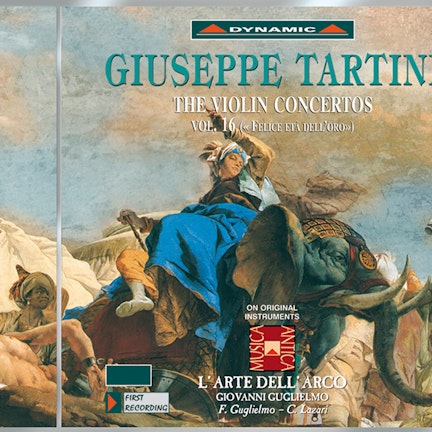
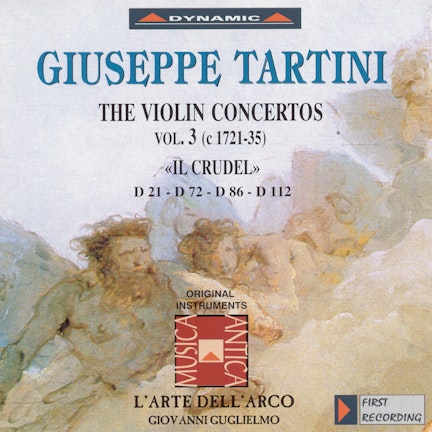
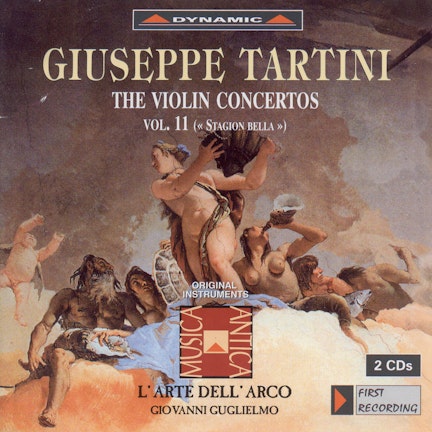
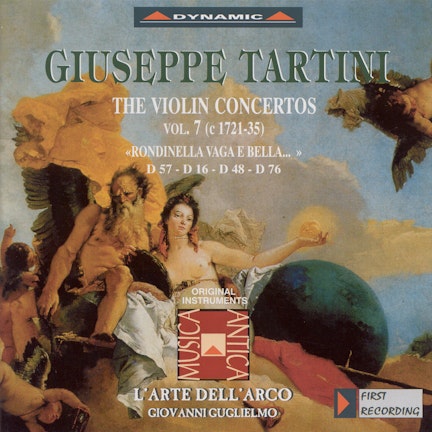
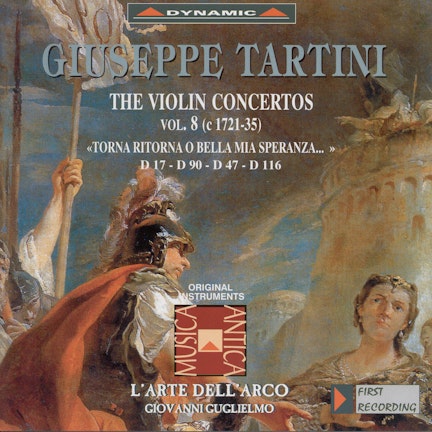
The performers completed missing or incomplete movements in Tartini's concertos based on their deep knowledge of his musical language, ensuring adherence to his formal, structural, and harmonic traits.
Composer Biography
Giuseppe Tartini, an Italian 18th-century composer, focused his entire musical output on the violin, his chosen instrument, neglecting other popular genres.
Composition History
Tartini's 135 Violin Concertos and about 200 Sonatas for violin and basso continuo form the main body of his musical legacy.
Recording & Production
The recording project faced challenges due to Tartini's manuscripts being largely unpublished, with thick, jumbled writing, frequent corrections, and missing parts.
Compositional Technique
Tartini's 'second creative period' (around 1735) is characterized by highly virtuosic instrumental writing, free from Vivaldian influence, and an increased expressive search in the slow movements, which became the works' true core.
Composition History
Most of Tartini's concertos exist only in manuscript form, as he, like many composers of his century, did not date his compositions, making chronological ordering difficult.
Composer's Artistic Vision
Tartini was not particularly influenced by Antonio Vivaldi, a Venetian composer, and even made "nasty criticism" about him in 1739.