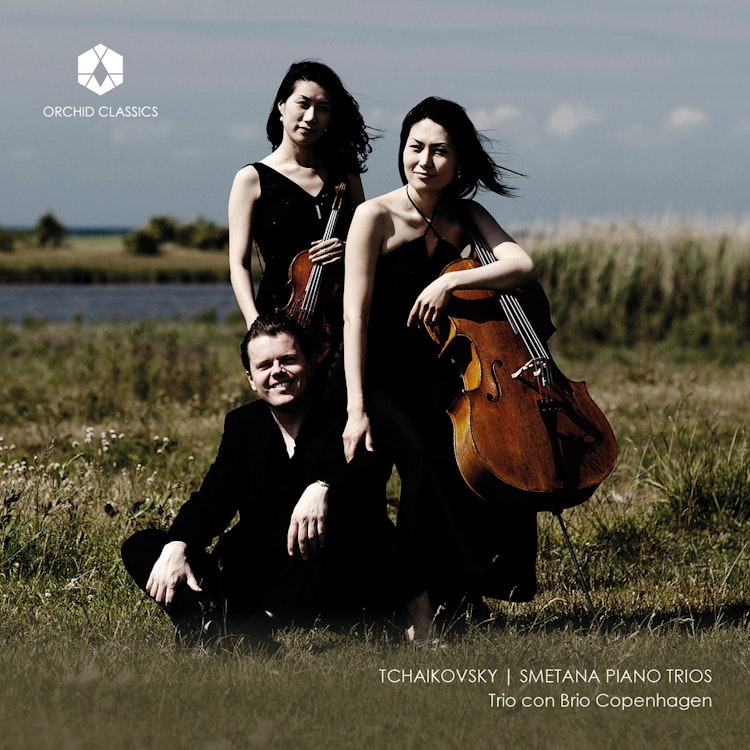
Tchaikovsky's Piano Trio features a virtuosic piano part, sometimes resembling a chamber concerto, which was likely a tribute to Nicholas Rubinstein, a fabulous pianist.
Compositional Technique
The formal organization of Tchaikovsky's trio is novel, consisting of two movements where the second movement is a monumental series of eleven variations.
Cultural Impact
Tchaikovsky's trio, published in 1882, established a tradition of Russian elegiac trios, influencing later composers like Rachmaninov, Arensky, and Shostakovich.
Composer Biography
Pyotr Ilyich Tchaikovsky, known for his orchestral and ballet music, also composed a small but significant oeuvre for chamber music, including three string quartets and a string sextet.
Composer Biography
Bedřich Smetana, a generation older than Dvořák, was the first truly nationalistic Czech composer, known for his operas, orchestral, and piano pieces reflecting Czech culture.
Composition History
Smetana dedicated his only piano trio, written in 1855, to his oldest daughter Bedřiška, who had died at age four from scarlet fever and possessed precocious musical talents.
Composition History
Tchaikovsky's Piano Trio in A minor was dedicated 'In Memory of a Great Artist,' referring to his friend and teacher Nicholas Rubinstein, the founder of the Moscow Conservatory.
You might also enjoy...
La Mer - French Piano Trios
Arensky: Piano Trios
Wolf-Ferrari: The Two Piano Trios
Rachmaninoff & Tchaikovsky: Piano Trios
Poul Ruders: Piano Trio (World Premiere Recording)
Persichetti: Parable 23 / Cowell: Trio in 9 Movements / Reale: Piano Trio No. 2
Pfitzner: Piano Trio in F Major, Op. 8
Schumann Piano Trios 1 & 2
Smetana & Janáček: Piano Trios
French Piano Trios - Golub Kaplan Carr Trio Performs Saint-Saëns, Debussy & Fauré