Tchaikovsky: Liturgy of St. John Chrysostom, Op. 41, TH 75 (Excerpts) & 9 Sacred Pieces, TH 78
6/14/2019, 19 Tracks, 1:17:12
Two of Tchaikovsky's major sacred works are the focus of this album by the Latvian Radio Choir and conductor Sigvards Kļava. The composer, always interested in Russian Orthodox music, wrote his monumental Liturgy of St. John Chrysostom in 1878, comprising fifteen movements to be sung during a liturgical service. His collection of Nine Sacred Pieces is from 1884-85.
Featuring
Sigvards Kļava
Kārlis Rūtentāls
Gundars Dziļums
Agnese Urka
Agate Burkina
Dace Strautmane
Latvian Radio Choir
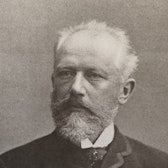
Pyotr Ilyich Tchaikovsky
Did you know?
1/7
Composer Biography
Pyotr Ilyich Tchaikovsky, the composer, regularly attended worship services and found great happiness and pleasure in the liturgy.
Compositional Technique
In his sacred works, Tchaikovsky avoided uniformity, repetition, and technical intricacy, focusing instead on emotional openness and directness of feeling.
Performer Biography
The Latvian Radio Choir, founded in 1940, is an award-winning ensemble known for its wide repertoire and for encouraging composers to write new music that challenges the human voice.
Composition History
Tchaikovsky's Liturgy of St. John Chrysostom, Op. 41, was written in 1878 as an initiative to create a new style of music for the Orthodox Church.
Composer's Artistic Vision
Tchaikovsky believed the 'sweet style' of contemporary church music, like that of Dmitri Bortnyansky, was inconsistent with the spirit of the Orthodox church and sought to create a new style.
Cultural Impact
Tchaikovsky's sacred music, including works on this album, helped pave the way for a new era of Russian sacred music by composers like Sergey Taneyev and Serge Rachmaninov.
Compositional Technique
Tchaikovsky's Liturgy of St. John Chrysostom can be approached as a worship service or as a purely musical, autonomous concert piece, as presented in this recording.
You might also enjoy...
Christmas Songs from Germany & All Over the World, Vol. 2
Tchaikovsky: Liturgy of St John Chrysostom, Op. 41; 9 Sacred Choruses
Bach 333: 4-Parts Chorales
Mikaeli Chamber Choir: The Songs of Songs
Schnittke: Penitential Psalms
Ubi Caritas (Duruflé) & Ubi Caritas (Gjeilo)
More Honourable Than the Cherubim
Aufblick
Ex Oriente Lux - Choir Masterpieces from Northern and Eastern Europe