Broadside ballads, which were loose sheets of paper with songs, played a significant role in spreading and standardizing melodies and texts that were previously transmitted orally.
Historical Context
The term "country dance" meant "a dance of the country" (i.e., the nation) and was enjoyed by both aristocrats and rural communities before Queen Elizabeth introduced it to court in the early 17th century.
Album & Artwork
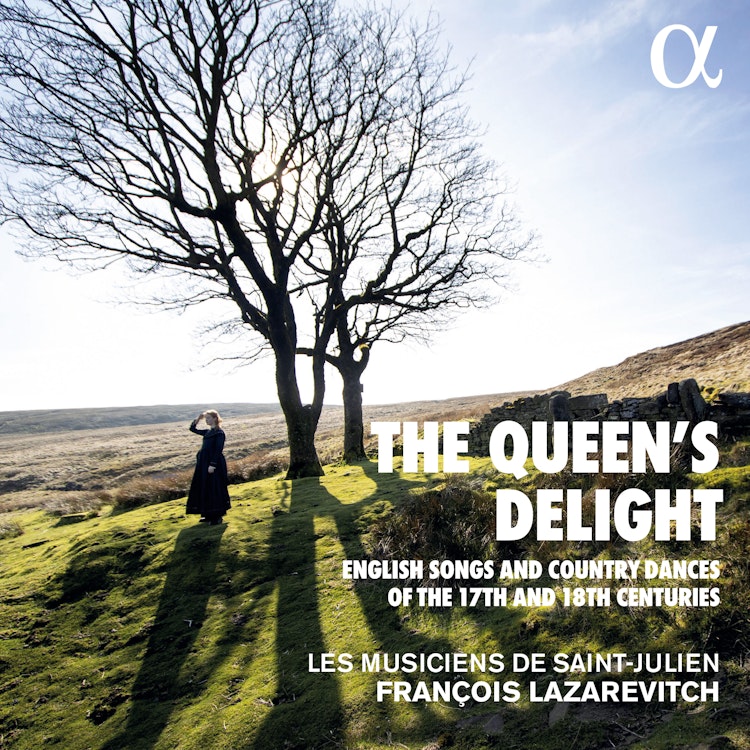
The album's title, "The Queen's Delight," refers to a common pursuit of both the aristocracy and the rural community in 17th and 18th century England.
Historical Context
The repertoire of ballads and country dances was popular across all levels of English society, from nobility to servants, in the 17th and 18th centuries.
Instruments
The recording features a diverse range of string instruments, combining metal strings (dulcimer and cittern) with gut strings (harp, violin, and viol), consistent with the historical practice of 'broken consorts'.
Cultural Impact
The popularity of ballads was so immense that it inspired John Gay's "The Beggar's Opera," which parodied classical opera by stringing ballads together.
Composition History
The album's program was built using melodies compiled by John Playford in his "English Dancing Master" from 1651 onwards, along with variations for recorder and violin published around 1700 in England and 17th-century Holland.
You might also enjoy...
Beauteous Softness
La bellezza: The Beauty of 17th Century Violin Music