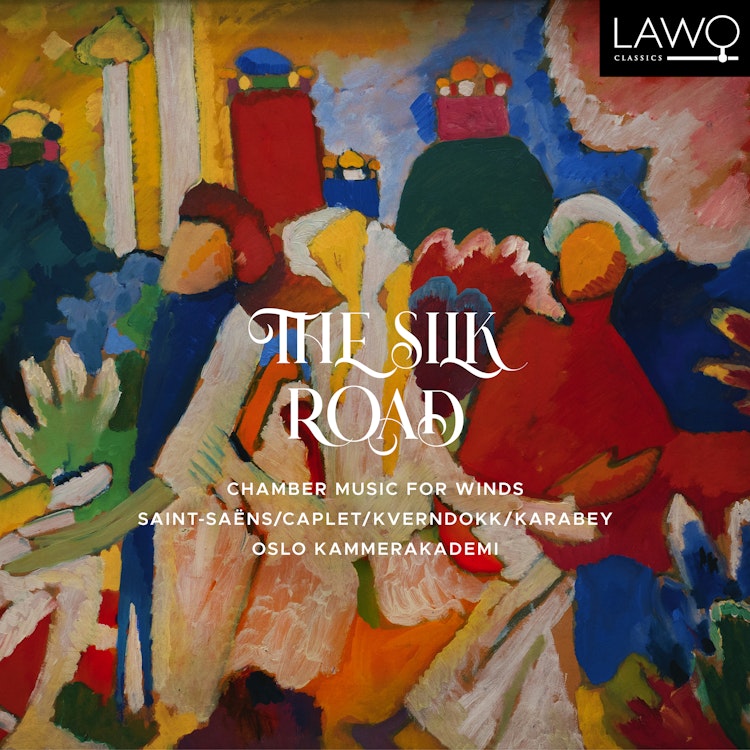
Oslo Kammerakademi uses historical brass instruments for Baroque, Classical, and Romantic repertoire to achieve an authentic sound and historically oriented performances.
Compositional Technique
Saint-Saëns's L'Orient et occident, subtitled 'Marche', features three sections: a traditional Western military march, a homage to Turkish Janissary music with Moorish rhythms, and a final section combining Western fugue with oriental and Western themes.
Performer Biography
Oslo Kammerakademi performs chamber music for winds based on the historical Harmoniemusik instrumentation and is led by artistic director David Friedemann Strunck.
Composer's Artistic Vision
By the mid-19th century, French composers deliberately included non-Western music elements to counteract the dominance of Germanic music and create a distinct French tradition.
Composition History
Camille Saint-Saëns's L'Orient et occident (1869) was commissioned for a gala evening connected to a major exhibition of oriental art.
Historical Context
In 19th-century France, the art of the 'Orient' (a term for North Africa and the Middle East) fascinated artists, partly due to Napoleon's campaigns in Egypt and Syria.
Composer Biography
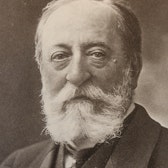
Unlike many of his contemporaries, composer Camille Saint-Saëns traveled widely and experienced 'Oriental' musics in their original context, particularly loving North Africa.
You might also enjoy...
Joanna Bailie: Artificial Environments
Berg & Zemlinsky: Lieder
Wolfgang Rihm: Chiffre-Zyklus (Live)
Alberto Posadas: Oscuro abismo de llanto y de ternura, Nebmaat, Cripsis & Glosspoeia
Augusta Read Thomas: Sol
Tulve: Lijnen
Gabriel Erkoreka: Kaiolan
Tann, H.: Shakkei / Green, E.: Piano Concertino / Lipper, B.: Circles of Light / Constantinides, D.: Landscape Vi
Misato Mochizuki: Chamber Music
Ivan Buffa: Identity
George Crumb: Songs , Drones And Refrains Of Death and Roger Sessions: Concertino For Chamber Orchestra