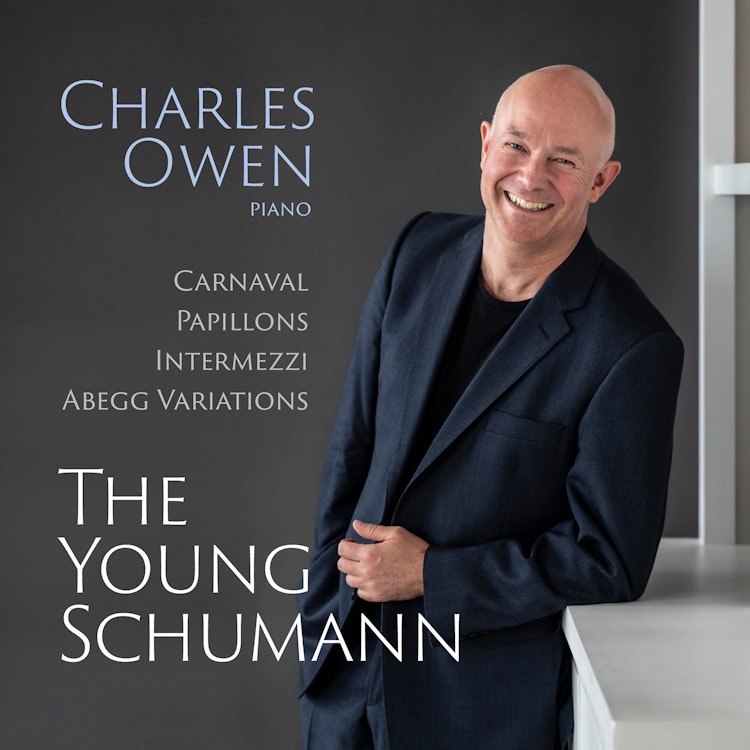
The Young Schumann: Carnaval - Papillons - Intermezzi - Abegg Variations
11/15/2024, 40 Tracks, 1:13:14
Featuring
Charles Owen
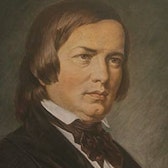
Robert Schumann
Did you know?
1/7
Compositional Technique
Schumann's Carnaval Op.9 features a recurring four-note cipher pattern, A-S-C-H and S-C-H-A, which refers to the hometown of Ernestine von Fricken and letters in Schumann's own name.
Composer's Artistic Vision
Robert Schumann, the composer, was fascinated with musical ciphers and literary allusions in his early works.
Composition History
Schumann's Papillons Op.2 is directly inspired by Jean Paul's novel 'Flegeljahre' ('Fledgling Years'), with annotations in Schumann's copy linking novel episodes to the music.
Compositional Technique
Schumann's 'Abegg' Variations Op.1 uses a musical cipher based on the letters A-B♭-E-G-G, which he claimed came from the name of Countess Pauline Abegg.
Compositional Technique
Schumann often conveyed the idea of disappearing sounds by releasing the notes of a sustained chord one by one, as heard in 'Abegg' Variations and Papillons Op.2.
Composer Biography
As a law student at Heidelberg University, Schumann found pleasure in the waltzes and polonaises of Franz Schubert and the novels of Jean Paul (Johann Paul Friedrich Richter).
Composer's Artistic Vision
Schumann invented two creative alter egos, Florestan and Eusebius, possibly inspired by the twin protagonists in Jean Paul's novel 'Flegeljahre'.