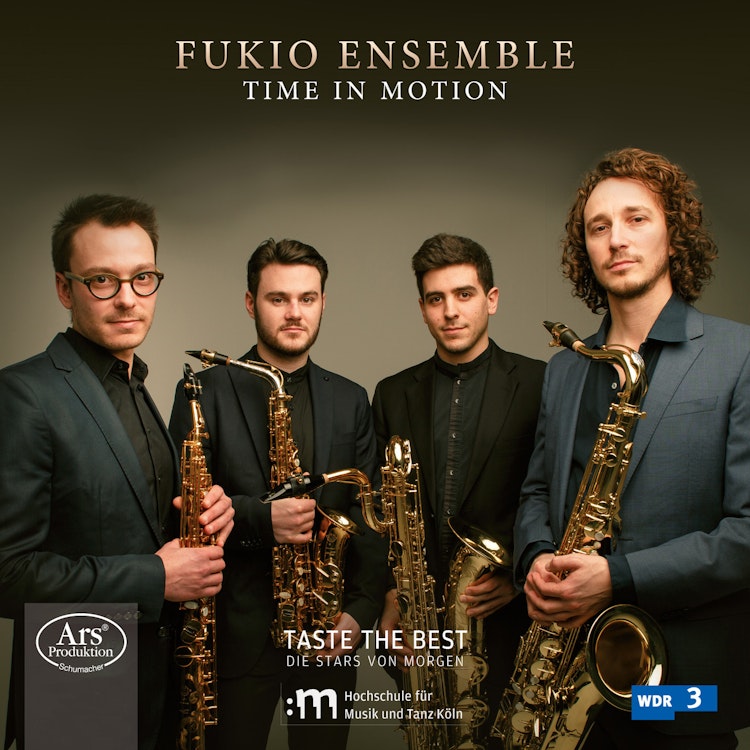
Adolphe Sax, the inventor of the saxophone, described it in his 1846 patent application as an instrument with a voice similar to strings but with more power and intensity.
Composition History
Manuel de Falla's opera "La Vida Breve" won a Madrid composition competition in 1905, but its promised performance did not materialize, leading Falla to move to Paris in 1907.
Composition History
Dvořák's String Quartet in F Major, Op. 96, known as the "American Quartet," was composed in less than three weeks during his stay in the Czech immigrant community of Spillville, Iowa.
Composer's Artistic Vision
Fabien Lévy, composer of "Towards the door we never opened," aims to write "cognitive music" that plays with expectations and surprises, perceived by the brain as a sequence of cognitive schemata.
Interpretation
The Fukio Ensemble's transcription of Dvořák's "American Quartet" maintains the original key and register, except for a technical adjustment in the second movement where a tenor saxophone replaces a baritone.
Historical Context
The saxophone's existence is not self-evident from a historical perspective, as its "nauseating sound" was considered unthinkable for classical chamber music in Germany until the 20th century.
Composer Biography
Guillermo Lago is the pseudonym of Dutch musician Willem van Merwijk, who composed under this Spanish name after contributing works in the style of Astor Piazzolla for a concert tour.
You might also enjoy...
Manuel Angulo: Retrato
Blow
María Granillo: Mousai
Ortiz, G.: Baalkah / Altar De Muertos / 6 Piezas Para Violeta
Max Johnson: When the Streets Were Quiet
Kaiseki
Wien Gegen den Strich
Woodwind Quintets - Leon, T. / Toussaint, E. / Ortiz, G. / Sierra, R. / Felciano, R. / Marquez, A. / D'Rivera, P.
Walker: Chamber Music for Mixed Ensembles
Unraveling Beethoven
SMS an Gott
Dai Fujikura: Zawazawa
York Winds: Folia
William Blank: Flow, Ophrys, Refrain II & (A)round