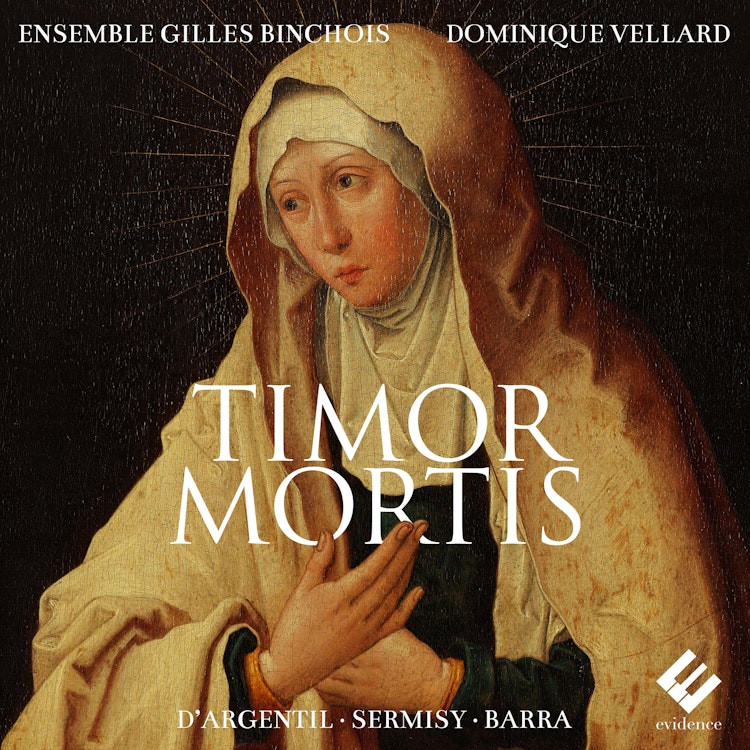
Claudin de Sermisy, whose Lamentations are featured, was the music director of the French Royal Chapel under King François I.
Composition History
Charles d'Argentil's Requiem is the earliest surviving polyphonic setting of the Requiem Mass, making it a starting point for a tradition continued by composers like Cristóbal de Morales and Palestrina.
Composer Biography
Charles d'Argentil, the composer of the Requiem Mass on this album, was a bass singer of French origin who served in the papal chapel in Rome for almost 30 years.
Compositional Technique
Charles d'Argentil broke new ground formally with his extensive musical setting of the final prayer after Mass, the responsory sung at the absolution, Libera me.
Composition History
The Requiem Mass by Charles d'Argentil is one of only about a dozen musical settings of the liturgy of the dead written before 1550 that still exist today.
Compositional Technique
The music of d'Argentil, Sermisy, and Barra shares characteristics such as light counterpoint, rich sonority, and a balance between imitation and homophonic declamation.
You might also enjoy...
The Sweetest Songs: Music from the Baldwin Partbooks III
Blasius Amon: Sacred Works
Sermisy: Lamentations
Sacred Treasures of Rome (Palestrina & His Contemporaries – A Golden Age of Polyphony in Rome)
Jacobus Vaet, Vol. 3
Manchicourt: Masses
Lejeune: Muze honorons, l'illustre & grand Henry
Lejeune: Motets pour le culte catholique et psaumes protestants