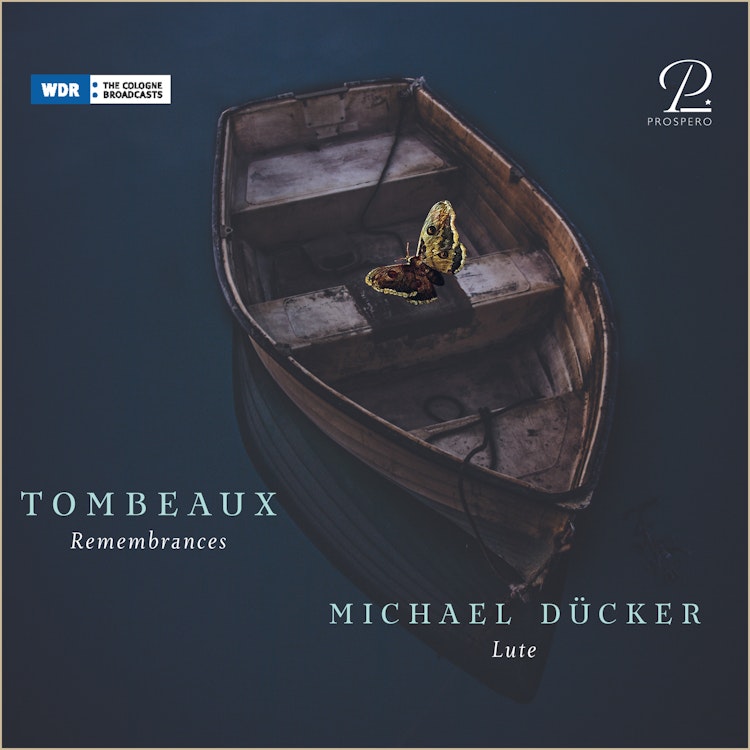
The 'Tombeau de Mezangeau' by Ennemond Gaultier, dedicated to his teacher René Mezangeau, may be the very first piece of its kind.
Historical Context
Queen Sophie Charlotte, the first Prussian Queen and a skilled harpsichordist, was dedicated a tombeau, possibly by Laurent de Saint Luc, due to her significant musical ambition and patronage.
Composition History
The 'tombeau' genre, a musical lament or 'musical tombstone', was invented by French lutenists in the first half of the 17th century.
Performer Biography
Lutenist Michael Dücker has performed as a soloist and continuo player with numerous ensembles across Europe, Africa, Asia, and the Americas, and has appeared on over 100 albums.
Composer's Artistic Vision
The concept of the tombeau is to provide a lasting 'memoria' or remembrance for the deceased, achieving a form of immortality through music.
Historical Context
The lutenist Charles Fleury, Sieur de Blancrocher, who died in 1652, was honored with tombeaux by four different composers: François Dufaut, Denis Gaultier, Johann Jacob Froberger, and Louis Couperin.
Compositional Technique
Tombeaux typically take the form of an allemande, but can also be a pavane or gigue, and may consist of a single movement, three movements, or be part of a larger suite.
You might also enjoy...
Dowland: Songs for Soprano and Guitar
The Knight of the Lute - Music From the Varietie of Lute Lessons 1610
Mortua dulce cano. A Florilegium of Late Renaissance Lute Music
Laudon Schuett: Dedications - New Works for the Lute
Bach Aufs Lautenwerk
Bach: Works for lute
Weiss, S.L.: Lute Sonatas, Vol. 7 - Nos. 15, 48
Libro primo
Reusner: Erfeuliche Lauten-Lust
J.S. Bach: Cello Suites, Vol. 1 (Arr. for Theorbo by Yasunori Imamura)
Am I Dreaming? (Contemporary Music for Baroque Lute)
Johann Sebastian Bach & Silvius Leopold Weiss: Baroque Music transcribed for Guitar