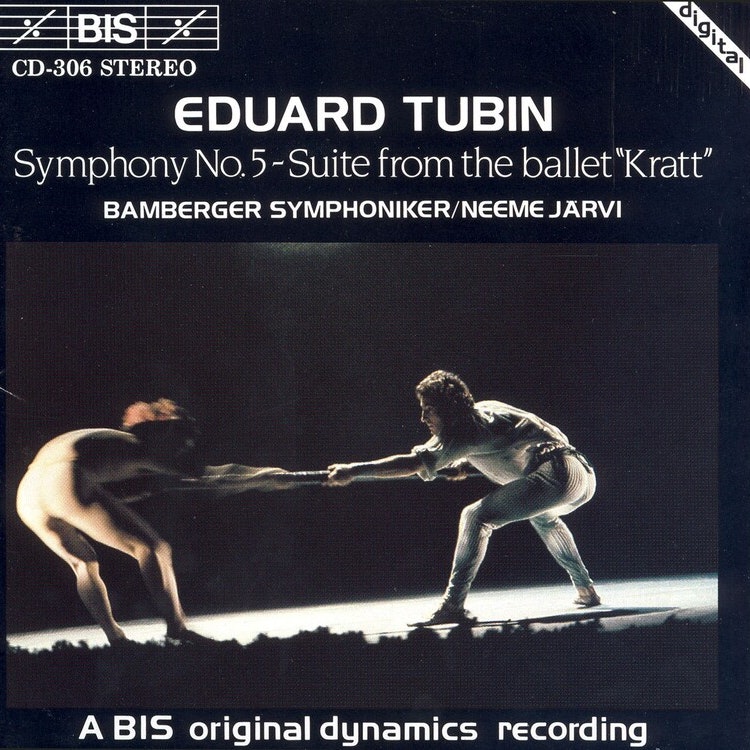
Tubin: Symphony No. 5 in B Minor / Suite From Kratt (The Goblin)
1/1/1986, 6 Tracks, 54:43
Featuring
Neeme Järvi
Bamberger Symphoniker
Eduard Tubin
Did you know?
1/7
Composition History
Tubin began composing the ballet "Kratt" in 1938, drawing material from the Estonian Folklore Archive in Tartu.
Composer Biography
The only copy of the score and orchestral parts for "Kratt" burned with the theatre, but Tubin reconstructed it from materials he took with him when he fled to Sweden in 1944.
Notable Performances
A performance of "Kratt" in Tallinn on February 24, 1944, the anniversary of the Estonian republic, was interrupted by an air-raid warning, and the theatre was bombed.
Composer's Artistic Vision
Composer Moses Pergament believed Tubin's Fifth Symphony was conceived as a sound depiction of the Estonian national tragedy, despite Tubin himself denying a definite program.
Historical Context
The ballet "Kratt" was performed during both Soviet and German occupations of Estonia, and its folk-based nature allowed it to bypass censorship that banned modern music.
Critical Reception
The premiere of Tubin's Fifth Symphony was well-received, with critic Curt Berg calling it "a surprisingly fine and powerful work."
Composition History
Eduard Tubin wrote his Fifth Symphony in Stockholm in 1946, making it his first symphony composed while in exile.
You might also enjoy...
Hovhannessian: Symphony No. 3; Marmar Ballet Suite
Aaron Copland: Symphony No. 3 & Music for a Great City
Chapi, R.: Symphony in D Minor / Fantasia Morisca
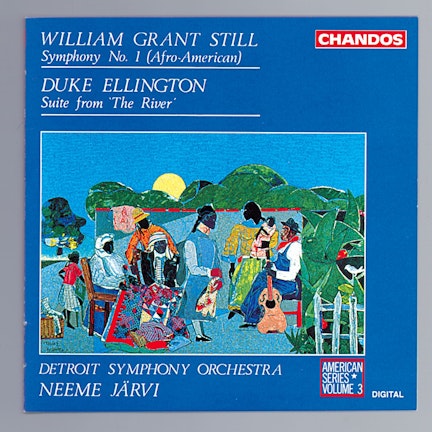
American Series, Vol. 3 - Still: Symphony No. 1 / Ellington: The River Suite
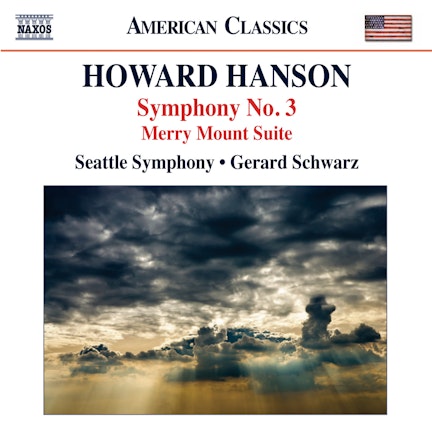
Hanson: Symphpony No. 3 - Merry Mount Suite
Casella: Complete Symphonies
Emmanuel: Orchestral Works
Lajtha: Orchestral Works, Vol. 1
American 20th Century Composers, Vol. 3
Stravinsky: Orchestral Works
O.L. Fernández: Symphonies Nos. 1-2
George Lloyd: The Symphonies Nos. 1 - 6
Enescu: The 3 Symphonies, Orchestral Suite No. 3 & 2 Romanian Rhapsodies