In the 17th century, the Baroque recorder was first played by professional oboists to add color to theatre music and orchestral works, before becoming popular with amateurs across northern Europe by the 1690s.
Composer's Artistic Vision
Vivaldi was adventurous in his scoring, enjoying the use of exotic instruments in his music and playing several himself, such as the viola all'inglese and possibly the viola d'amore.
Composer Biography
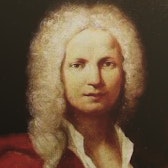
Antonio Vivaldi, who worked at the Venetian ospedale called the Pietà, wrote concertos for an extraordinary number of woodwind instruments, including flutes, oboes, recorders, bassoons, chalumeaux, and clarinets.
Instruments
The Baroque recorder, unlike its Renaissance predecessor, was made with a conical bore using several interlocking pieces of wood.
Interpretation
The continuo in two of these concertos is played on the organ instead of the harpsichord, reflecting the practice at the Pietà, where Vivaldi's concertos were performed by girls in a chapel with an organ.
Composition History
Vivaldi's employment at the Pietà, a Venetian ospedale, from 1703, provided him with access to an unusual range of teachers, including oboists who also played the recorder.
Composer Biography
Vivaldi had many contacts with German music and musicians, including Johann Pisendel, a violinist and reputed pupil, who helped Vivaldi form a lasting relationship with the Dresden court.
You might also enjoy...
Caught in Italian Virtuosity
Vivaldi: Sonate e concerti per flauto traverso
Vivaldi: Solo Concertos
Italophilia - Discovering the Italian Style in Handel's London
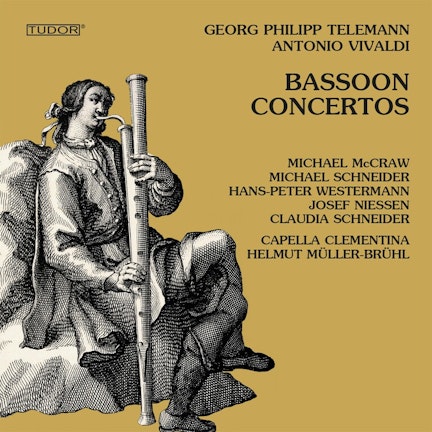
Georg Philipp Telemann · Antonio Vivaldi: Bassoon Concertos | Michael McCraw. Michael Schneider. Hans-Peter Westermann. Josef Niessen. Claudia Schneider. Capella Clementina. Helmut Müller-Brühl
Corelli In London
Apocryphal Sonatas
Vivaldi: Concerti per flauto
London circa 1740: Handel's musicians
La bellezza: The Beauty of 17th Century Violin Music