The organ used for the chorale "Komm, heiliger Geist" is the Arp Schnitger organ in St. Ludger's Church in Norden, Germany, built in 1686/87 and 1691/92.
Composition History
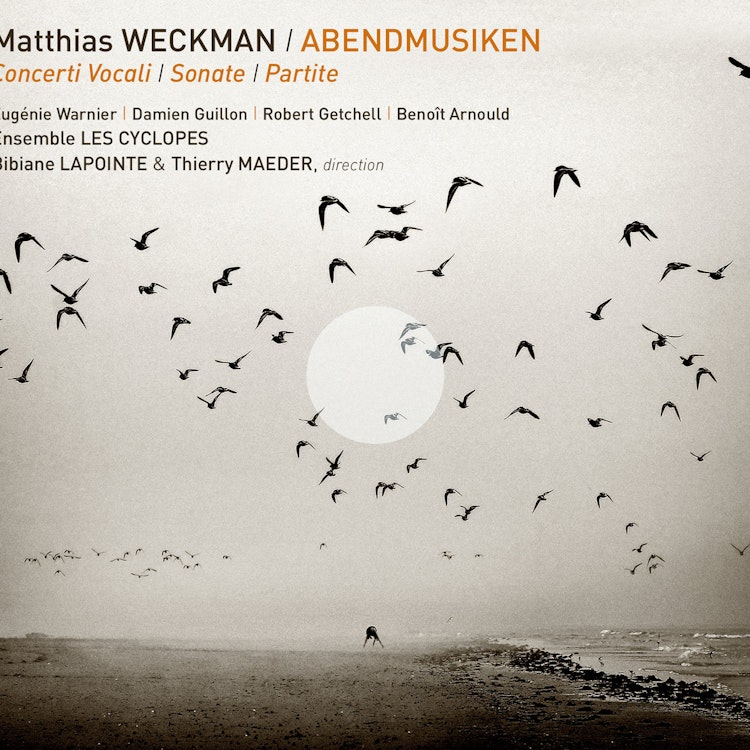
The three sacred concertos on this recording were written in 1663, a year when Hamburg was ravaged by the plague, and reflect the mourning and despair of that time.
Composer Biography
Matthias Weckman, the composer, received personal education from Heinrich Schütz, a renowned German composer, from 1629 onwards.
Composer's Artistic Vision
In Hamburg, Weckman founded the Collegium Musicum in 1660, a group that met weekly to reflect upon and experiment with developing a distinct German musical style, separate from French and Italian influences.
Composition History
Weckman's appointment as organist at St. James's Church in Hamburg involved a humorous situation where the city authorities wanted him to marry the previous organist's widow, but she had already chosen someone else.
Historical Context
Hamburg, where Weckman lived, was the second largest metropolis in the Holy Roman Empire after Vienna and avoided the worst of the Thirty Years War due to skillful political maneuvering.
Composition History
Weckman once tricked Kantor Selle, a choirmaster, into performing his piece "Weine nicht" by attributing it to Christoph Bernhard, a composer whose reputation was then greatly enhanced.
You might also enjoy...
Bach: vier Ouvertüren
Muzyczne dziedzictwo miasta Gdańska, Vol. 5 - Easter Cantatas of 18th Century Gdańsk