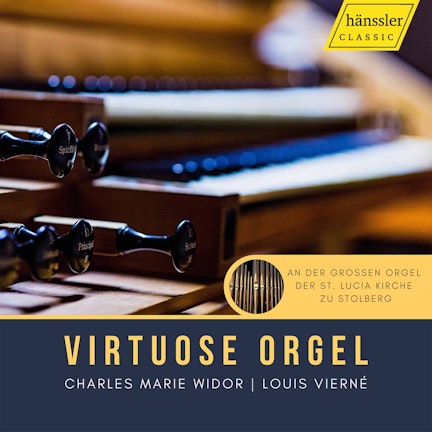
After the French Revolution, nearly half a century of silence followed for French organ art, as countless instruments were destroyed.
Instruments
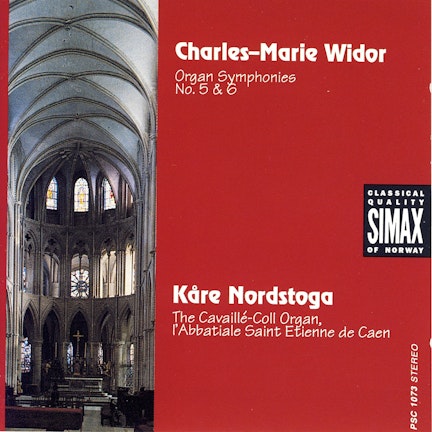
The Cavaillé-Coll organ in Saint-Étienne Church, Caen, is a late masterpiece by Aristide Cavaillé-Coll, combining an 18th-century wooden case with his 1882-1885 instrument.
Instruments
Aristide Cavaillé-Coll, a genius organ builder, created the 'symphonic organ' starting with his instrument for Saint-Denis in 1841, ushering in a new era for French music.
Composer Biography
Charles-Marie Widor, known as the father of the organ symphony, served throughout his life at the great Cavaillé-Coll organ of Saint-Sulpice.
Composer Biography
Louis Vierne, who was nearly blind from birth, devoted his life to the organ and served as titular organist at Notre-Dame Cathedral in Paris.
Composer's Artistic Vision
César Franck, inspired by the orchestral range of Cavaillé-Coll's instruments, established the concept of a 'symphony for the organ' with his Grande Pièce Symphonique, Op. 17.
Composition History
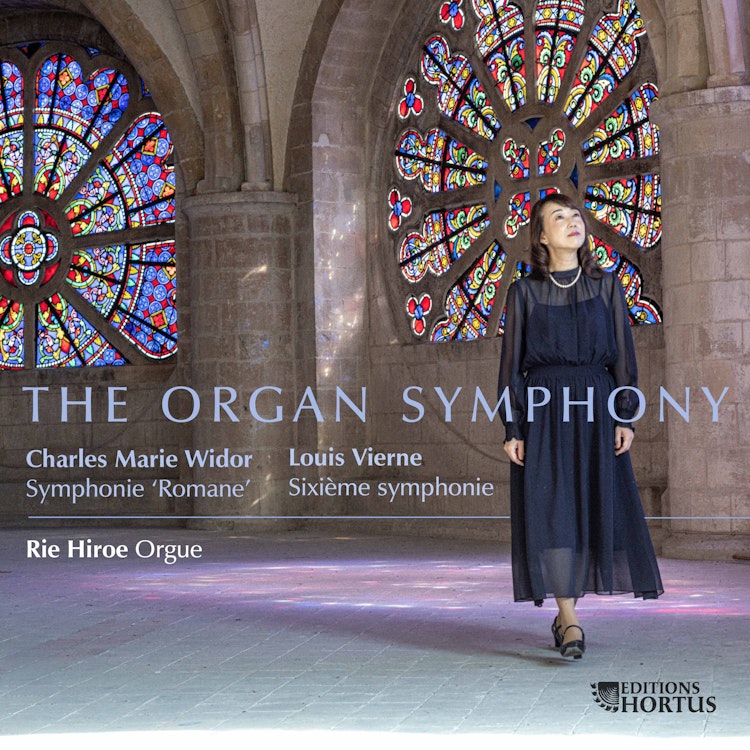
Louis Vierne's Sixth Symphony, composed in 1930, stands as both a culmination of his work and a farewell, as he died seven years later at the console of Notre-Dame.
You might also enjoy...
Widor: Organ Symphonies No. 5 & 6
American Classic Widor, Vol. 5
Widor: Complete Organ Works Vol. 3
Organ Music, Vol. 2
Widor: Symphonies Nos. 5 & 6
American Classic Widor, Vol. 1
Bombarde! - French Organ Classics
American Classic Widor, Vol. 3
Vierne: Carillon de Westminster / Widor: Symphony No. 5
Widor: Organ Symphonies, Vol. 3
Elgar: Enigma Variations & Organ Sonata
Mussorgsky: Obrazki z wystawy - Liszt: Ad nos, ad salutarem undam