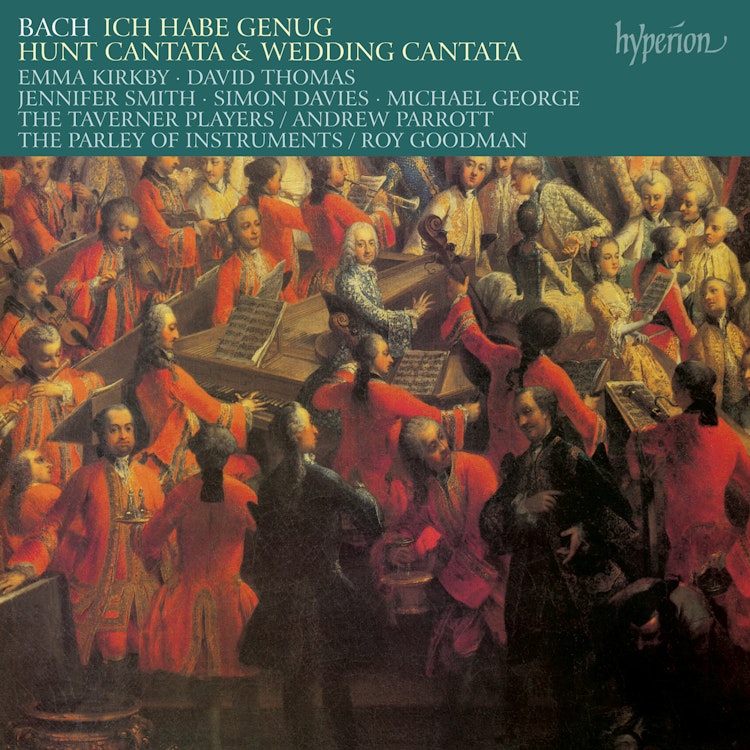
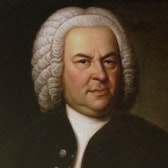
Bach's position at Cöthen (1717-1723) was so eminent and well-paid that his later, less respected and harder-worked role in Leipzig must have been difficult to bear.
Interpretation
The recording of the 'Hunt Cantata' aims to recreate a 1716 performance, using one instrument per string part and a small cello or violone grosso for the bass lines, reflecting the likely size of Bach's ensemble at Weimar.
Recording & Production
This recording follows a theory by the late Professor Thurston Dart, suggesting that Bach's 'Hunt Cantata' and an early version of Brandenburg Concerto No. 1 might have been performed together for Duke Christian's birthday.
Composer's Artistic Vision
Bach, like the 18th-century English novelist and clergyman Laurence Sterne, believed that if music for secular purposes was of high artistic quality, it was equally suitable for religious contexts.
Composition History
The numbering of Bach's cantatas, established by the Bach Gesellschaft edition in the 19th century, bears no relation to their chronological order of composition.
Compositional Technique
Bach himself preferred the term 'concerto' for works for voices and instruments, reserving 'cantata' for pieces modeled on the Italian secular cantata form, which typically featured only recitatives and arias for one voice and continuo.
Composition History
Bach often reused his secular music in church cantatas; for example, he used parts of the 'Hunt Cantata' in his Whitsun cantata, BWV68, and a cantata for the Feast of St Michael and All Angels, BWV149.
You might also enjoy...
Handel: Il duello amoroso, Italian Cantatas for Solo Alto
Graupner: Lass mein Herz
Il caro Sassone: Handel in Italy
Italian Secular Cantatas
Lorraine
Bach, JS : Sacred Cantatas BWV Nos 198 & 199
J.S. Bach: Cantatas with obligate Flute
Bach: Secular Cantatas, Vol. 1
Bach, JS : Sacred Cantatas BWV Nos 198 & 199
Music from Aston Magna
Johann Sebastian Bach: Solokantaten und Oboenkonzert
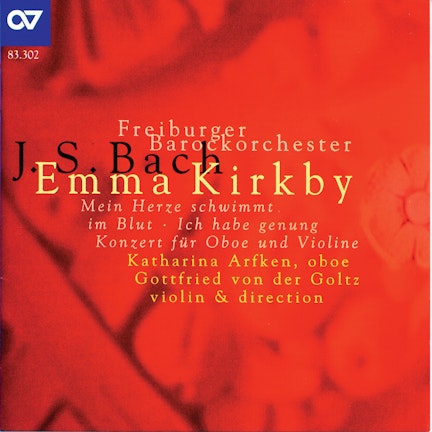
Bach, J.S.: Mein Herze Schwimmt Im Blut / Ich Habe Genug (Kirby)
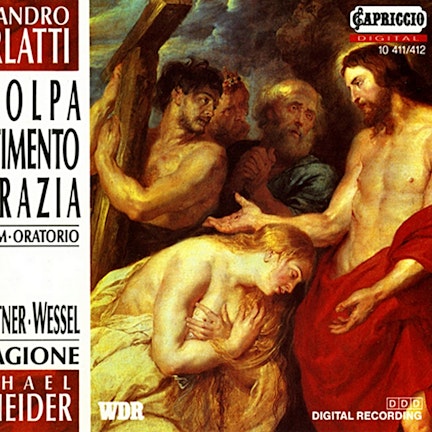
Scarlatti: Oratorio per la Passione di Nostro Signore Gesu Cristo - Stradella: Lamentatione per il Mercodi Santo