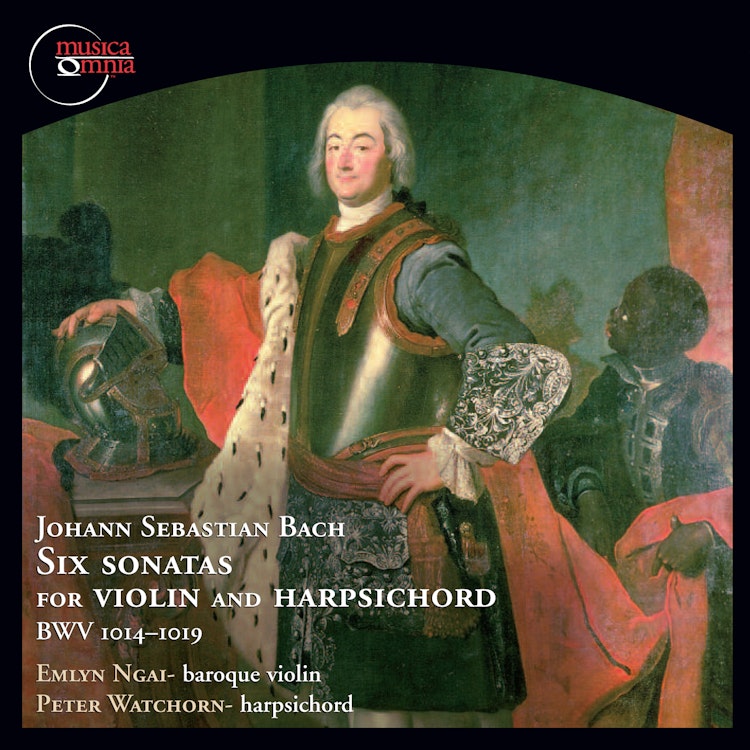
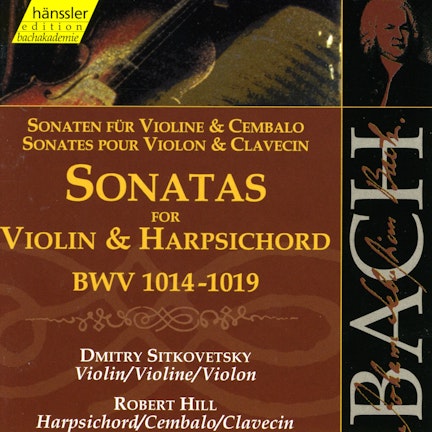
Bach: Six Sonatas for Violin and Harpsichord, BWV 1014-1019
6/15/2014, 26 Tracks, 1:43:27
Featuring
Emlyn Ngai
Peter Watchorn
Johann Sebastian Bach
Did you know?
1/7
Instruments
The harpsichord used in this recording is a large Saxon-style instrument built by Alastair McAllister in 1999, inspired by instruments of Johann Heinrich Harraß, a maker known for powerful instruments.
Interpretation
This recording aims to restore the balance between violin and harpsichord to Bach's original intention by using a baroque violin and a large, powerful German-style harpsichord.
Composition History
These sonatas were likely composed during J. S. Bach's time as Capellmeister (1717-22) at the court of Prince Leopold of Anhalt-Cöthen, a period when he focused on instrumental music.
Compositional Technique
The sonatas for violin and obbligato harpsichord are structurally similar to Bach's organ trio sonatas and harpsichord sinfonias, with the violin integrated into a three- or four-part contrapuntal texture.
Performer Biography
Emlyn Ngai, the baroque violinist on this recording, was the first prize winner on baroque violin in the 1995 Locatelli Concours Amsterdam.
Composition History
J. S. Bach's son, Carl Philipp Emanuel Bach, stated that these six sonatas for violin and obbligato harpsichord were among his father's best works, even 50 years after their composition.
Composer's Artistic Vision
J. S. Bach assimilated the contemporary Italian style of concertante writing into these sonatas, particularly after discovering Venetian instrumental music in the 1710s.
You might also enjoy...
Bach Sonatas BWV 1014-1019
J.S. Bach: Sonatas for Violin and Harpsichord
J.S. Bach: Sonatas for Violin and Obbligato Harpsichord vol. 1
J.S. Bach: Sonatas for Violin & Harpsichord, BWV 1014-1019
Bach: 6 Sonatas for Violin & Harpsichord
Bach: Sonatas for Violin and Organ, BWV 1014 - 1019
Bach: 6 Sonatas for Violin & Harpsichord
Bach, J.S.: Sonatas for Violin and Harpsichord, Bwv 1014-1019
Bach, J.S.: Sonatas Nos. 1-6 for Violin and Harpsichord
Bach, J.S.: 6 Sonate per Violino e Cembalo BWV 1014 - 1019
Bach: Sonates pour clavecin obligé et violon, BWV 1014-1019