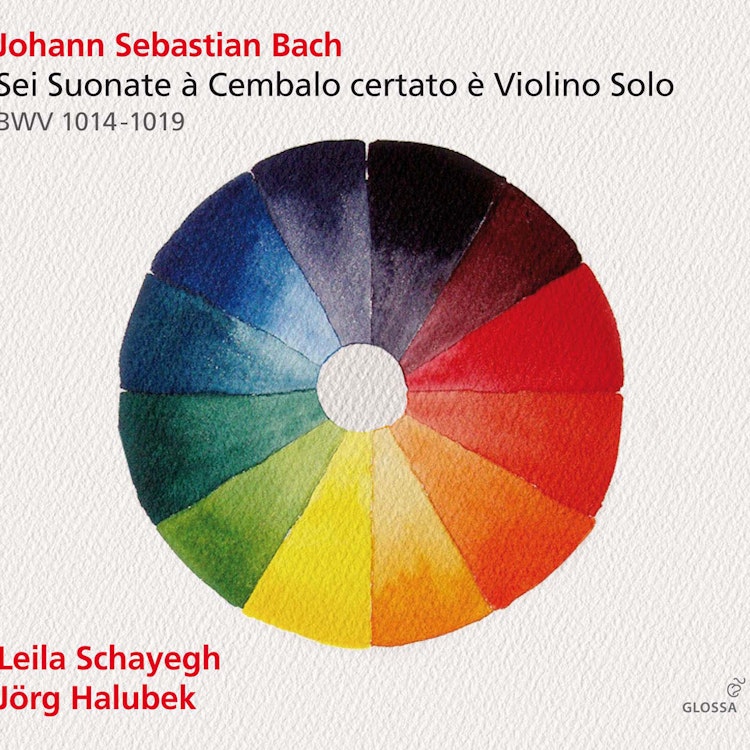
J.S. Bach: Sonatas for Violin & Harpsichord, BWV 1014-1019
1/29/2016, 27 Tracks, 1:34:52
Featuring
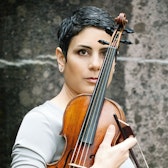
Leila Schayegh
Jörg Halubek
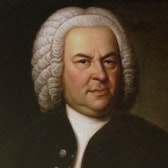
Johann Sebastian Bach
Did you know?
1/7
Interpretation
The performers, Leila Schayegh and Jörg Halubek, have been working on these Bach sonatas for ten years, finding a balance between rigor and freedom in their interpretation.
Compositional Technique
These sonatas contain an impressive array of compositional forms, reflecting Bach's continuous experimentation and pursuit of new forms beyond existing instrumental techniques.
Composer's Artistic Vision
Bach assigned central significance to musical keys and their inextricably linked characters, as documented by the theorist Johann Mattheson, whom Bach highly esteemed.
Interpretation
The performers took the liberty of improvising a great deal, adhering closely to Bach's ornamentation style and the principles outlined by Carl Philipp Emanuel Bach in his essay on keyboard playing.
Interpretation
For this recording, the performers used a violin mute on two occasions to expand the color palette, inspired by similarities with a sonata by Bach's son, Carl Philipp Emanuel Bach.
Compositional Technique
Bach's six sonatas are conceived as trio sonatas, with the harpsichordist's left hand playing the bass, and the right hand providing a top part equal to the violin, which was a complete novelty at the time.
Composition History
Johann Sebastian Bach's Sei Suonate à Cembalo certato è Violino Solo, which broadly took their definitive form around 1725, demonstrate his desire to sum up something truly exemplary in chamber music.
You might also enjoy...
J.S. Bach: Sonatas for Violin and Harpsichord
Bach, J.S.: 6 Sonate per Violino e Cembalo BWV 1014 - 1019
Bach, J.S.: Sonatas Nos. 1-6 for Violin and Harpsichord
Bach, J.S.: Sonatas for Violin and Harpsichord, Bwv 1014-1019
Bach: 6 Sonatas for Violin & Harpsichord
Bach: 6 Sonatas for Violin & Harpsichord
Bach, J.S.: Sonatas for Violin and Harpsichord, Vol. 1
Bach, J.S.: Sonatas for Violin and Harpsichord BWV 1014-1019
J.S. Bach: Violin Sonatas, BWV 1014-1019
New Baroque: Sonatas
Bach, J.S.: Sonatas for Violin and Harpsichord, Vol. 1 - Bwv 1014, 1015, 1016