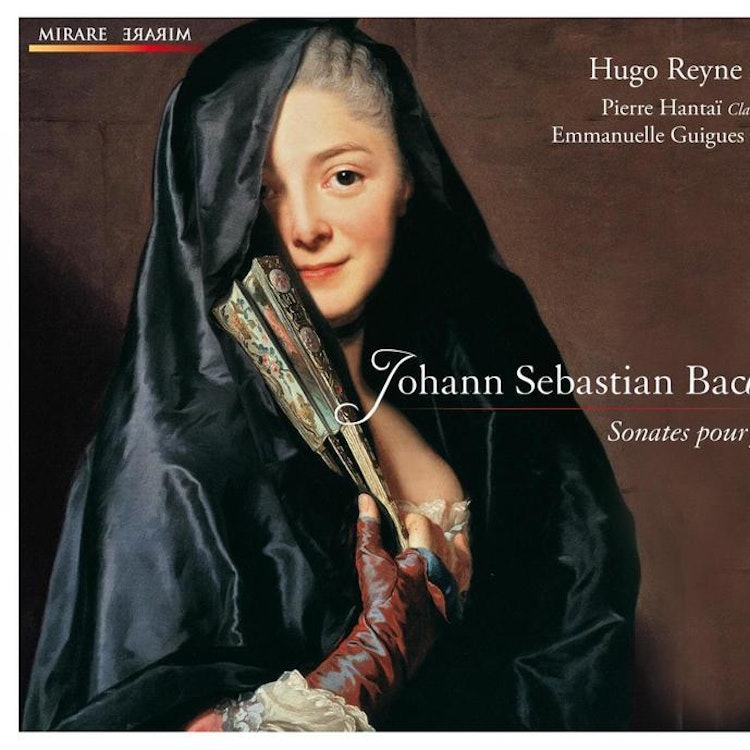
The Sonata BWV 1035 was likely composed for the court of Potsdam, which Bach visited in 1741, and a surviving copy is dedicated to Michael Gabriel Fredersdorf, valet and flute partner to Frederick the Great.
Performer Biography
Pierre Hantaï, the harpsichordist, developed a passion for Bach's music around age ten and studied with Gustav Leonhardt, who later invited him to perform under his direction.
Composition History
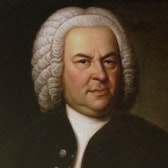
Bach's flute sonatas do not form a homogeneous collection; each piece corresponds to a different creative period, and Bach himself did not assemble them for publication.
Interpretation
The recording features transpositions of the original transverse flute works for recorder, including a semitone up for BWV 1035, a third up for BWV 1034, and a fourth up for BWV 1033, a common practice in Bach's time.
Performer Biography
Emmanuelle Guigues, the viola da gamba player, studied with Jordi Savall and Paolo Pandolfo at the Schola Cantorum of Basel and has a keen interest in improvisation and contemporary repertoire for her instrument.
Interpretation
The performers chose to include the rarely recorded Suite BWV 997 and present the Sonata in B minor (BWV 1030) in its early G minor version with a tenor flute, a probable premiere recording.
Performer Biography
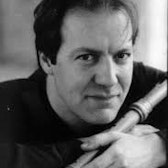
Hugo Reyne, the recorder player, was the principal recorder with Les Arts Florissants from 1983 to 1996 and played the role of a music teacher in the 1995 film Le Péril jeune.
You might also enjoy...
Giuseppe Sammartini: Sonatas for Recorder and Basso continuo, Vol.2
Bach Transcriptions
Handel's Recorder
Accademia dell'Arcadia, Roma 1710: Baroque Masterpieces of a Secret Society
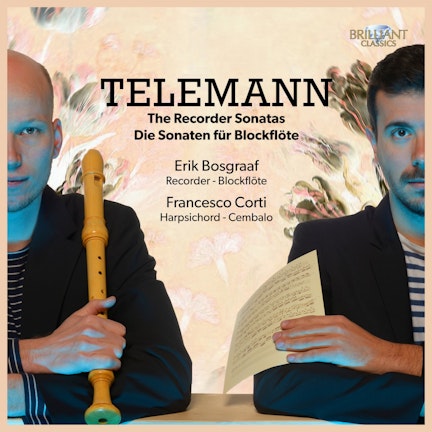
Telemann: The Recorder Sonatas
Music at the Court of Friedrich Ii, King of Prussia: The Transverse Flute in Potsdam
Paisible: Complete Recorder Sonatas
Anthology of the Recorder, Vol. 3
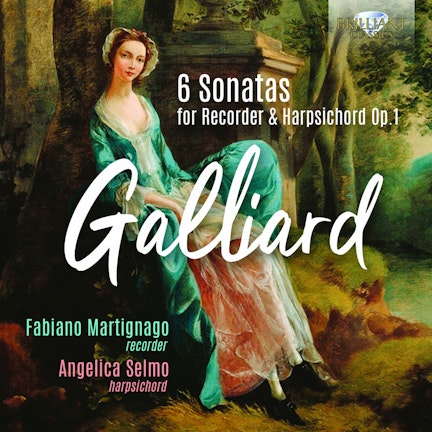
Galliard: 6 Sonatas for Recorder & Harpsichord, Op. 1