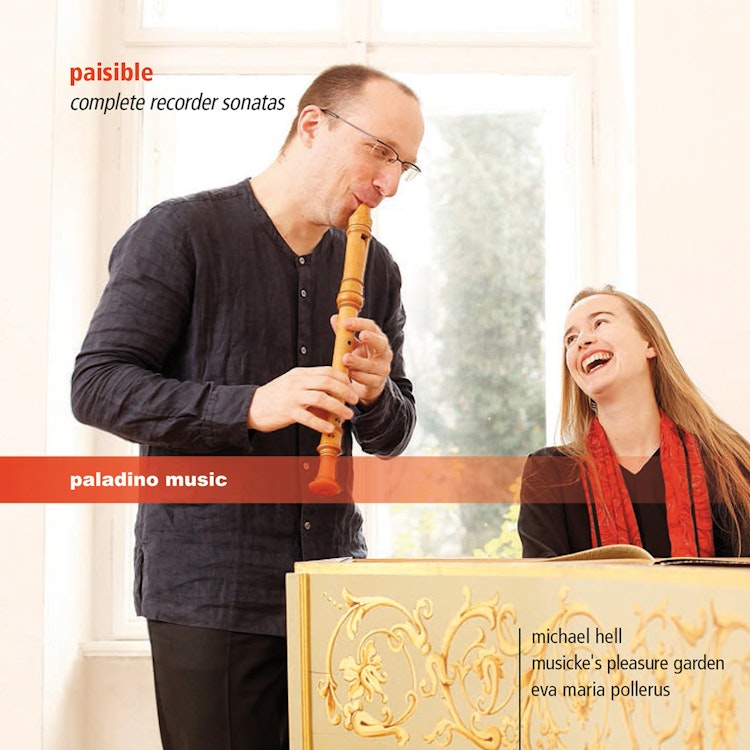
Paisible's music uniquely reflects the diverse influences of French, English, Italian, and German composers of his time, as he was in constant contact with new music through his dual career as a soloist and orchestra musician.
Cultural Impact
Paisible's performances of 'entertainments for the little flute' contributed to a growing market of amateur recorder players in England around 1700.
Historical Context
Paisible brought a new type of three-part Baroque recorder to England, which was enthusiastically received and differed significantly from the Renaissance instruments used at the time.
Composer Biography
Jacques Paisible, also known as James Pesible, was born into a family of musicians around 1656 and came to England in 1674 with opera composer Robert Cambert.
Composition History
While some of Paisible's works, like duets and music for plays, were published during his lifetime, his solo sonatas were only published at the end of the 20th century.
Interpretation
The performers on this album interpret Paisible's music by incorporating different national performance practices, such as French ornaments and dance tempi, and Italian ornaments and tempo rubato, reflecting the diverse styles in his compositions.
Compositional Technique
Paisible's sonatas feature highly idiomatic writing for the recorder, including virtuoso cascades, dazzling prestos, and witty concluding passages, which were likely too demanding for the amateur market.
You might also enjoy...
Giordani: 6 Flute Concertos
Telemann: Die Kleine Kammermusik
Bach Transcriptions
Telemann / Quantz / Vivaldi / Bach, C.P.E.: Chamber Music for Recorder
Telemann
Caffe=Hauß Zimmermann
Bach: Sonates pour flûte
Galliard: 6 Sonatas for Recorder & Harpsichord, Op. 1
Giuseppe Sammartini: Sonatas for Recorder and Basso continuo, Vol.2
Bellinzani: Sonate a flauto solo con cembalo o violoncello, Opera III