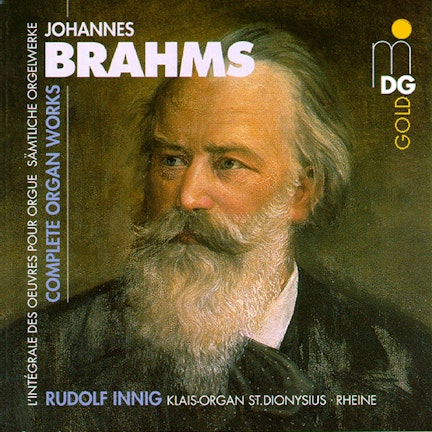
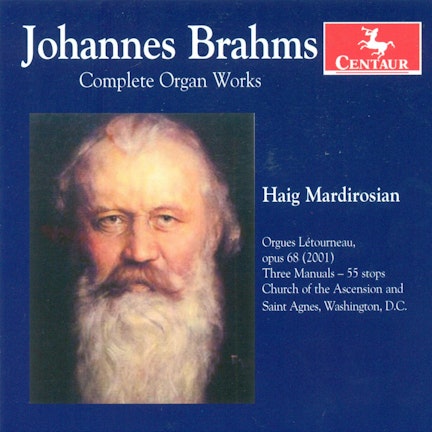
Johannes Brahms, a 'Classicist', adhered to the ideas of Mendelssohn and promoted 'absolute' music, focusing on traditional forms and counterpoint.
Composition History
Forty years later, near the end of his life in 1896, Brahms returned to the organ to write his last works, the Eleven Chorale Preludes, Op.122, while coming to terms with Clara Schumann's death.
Composition History
The first period of Brahms's organ compositions, including two Preludes and Fugues and 'O Traurigkeit, o Herzeleid', coincided with Robert Schumann's sickness and death in 1856.
Compositional Technique
The Fugue in A flat minor, WoO8, is one of the most complicated 19th-century fugues, featuring a countersubject that includes the notes B.A.C.H.
Composer Biography
Brahms composed for the organ during two intense periods of his life, both linked to his close, mysterious relationship with Clara Schumann, who loved the instrument.
Compositional Technique
Brahms's Prelude and Fugue in G minor, WoO10, written in 1857, uses dramatic Baroque features like descending chromaticism for pain and the 'tritonus' or 'diabolus in musica' to represent 'Inferno'.
Performer Biography
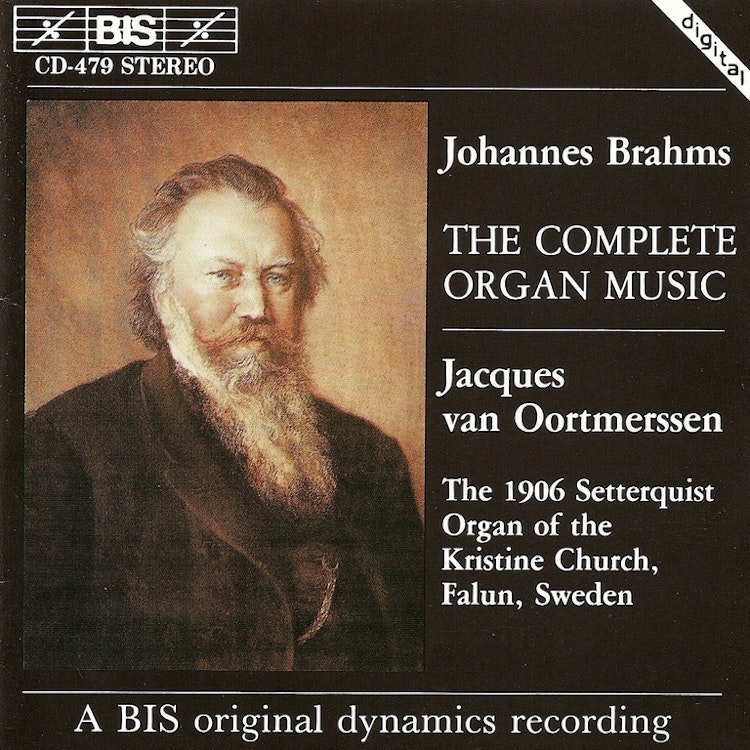
Jacques van Oortmerssen, the organist on this recording, is a leading organist who studied with Marie-Claire Alain and won first prize in the Dutch National Improvisation Competition.